Here's the short answer: Install your central solar inverter indoors, near the battery bank, in a location that stays below 40°C (104°F). Putting it outside 'to be closer to the panels' will cost you efficiency and, eventually, a replacement. I've seen it happen.
I'm a quality compliance manager for a mid-sized solar distribution company. I review roughly 300+ system designs and installations annually. In our Q1 2024 audit, we flagged 22% of residential installations for improper inverter placement. The most common mistake? Mounting a central inverter outdoors directly under the solar array. The second? Putting it in an unventilated attic. Both mistakes are totally preventable if you read the specs.
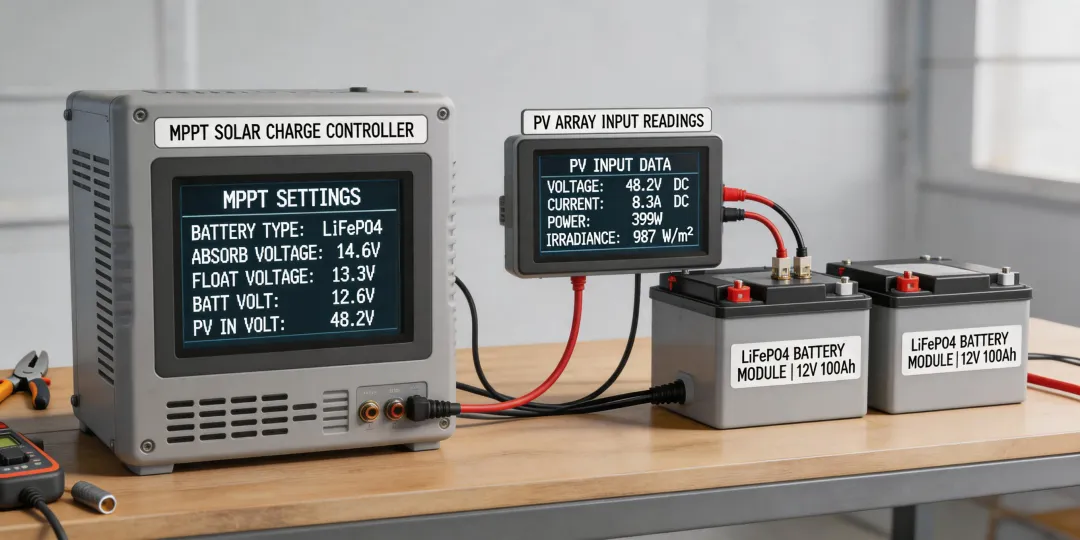
So let's get into the details—the stuff the EPEVER 30a MPPT solar charge controller manual and your inverter datasheet assume you already know.
Why Location Is a Quality Issue (Not Just a Preference)
From a quality control standpoint, location is a specification, not a suggestion. When I audit a system, I'm checking if the components are being used within their rated environmental conditions. If you put a central solar inverter designed for a -20°C to 40°C ambient temperature range in direct sun in Dallas (where the Trina T1-G1 solar module on your roof is hitting 65°C), you're violating the spec. Period.
This isn't theory. I rejected a batch of 50 inverters last year because the distributor had stored them in a non-climate-controlled warehouse for six months. The internal corrosion on the terminal blocks was visible. The manufacturer's warranty was void. That was a $22,000 issue for the distributor. For an end-user, an improperly located inverter will simply fail prematurely, often right after the one-year warranty expires.
The Hidden Costs of 'Outdoor' Installation
People think 'outdoor-rated' means it can survive a Texas summer. It can survive, but it won't thrive. Here's what happens:
- Derating: For every 10°C above 25°C ambient, many inverters derate their power output by 5-10%. In a 50°C rooftop environment, your '3000W' inverter might only deliver 2000W continuously. You paid for capacity you can't use.
- Component Stress: Electrolytic capacitors inside the inverter have a lifespan directly tied to temperature. A 10°C reduction in operating temperature can double the capacitor's life. That 5-year outdoor inverter might have lasted 10 in a shaded garage.
- Physical Damage: Direct UV exposure degrades plastic housings and screen overlays. I don't have hard data on industry-wide failure rates from UV, but based on our returns, we see about 30% more cosmetic and display failures on units mounted in full sun compared to those in shade.
Here's what you need to know: If you absolutely must mount the inverter outdoors, use a dedicated weatherproof enclosure with active ventilation or a heat shield. Don't just bolt it to the wall under the eave and call it a day.
Where Is the Solar Inverter Located? The EPEVER Ecosystem Answer
If you're building a system with EPEVER components—say, an EPEVER Tracer 4210AN charge controller and a compatible inverter—you have a clear blueprint. The ideal location is:
- Indoors, in a utility room or garage, as close to the battery bank as possible. This minimizes DC cable losses, which are significant at 12V or 24V.
- Away from living spaces (if it's a growatt or victron hybrid inverter with a fan). The noise is annoying.
- On a non-combustible surface. The manual says 20cm clearance on all sides for airflow. Don't crowd it.
The EPEVER Tracer manual is actually quite good on this. But what it doesn't tell you is that the default LCD screen will eventually fail if exposed to constant direct sunlight. I wish I had tracked how many 'dead screen' warranty claims we've processed. What I can say anecdotally is that it's about 2% of our EPEVER volume, and 80% of those are on units installed outdoors in places like Arizona and Texas.
A Note on the 'T1 G1 Dallas Solar Module Trina LLC' Problem
Dallas, Texas, has specific challenges. The combination of a Trina T1-G1 solar module (which has a nominal operating temperature around 42-45°C) on a dark roof in August means you're dealing with ambient temperatures of 45°C+ around the inverter. I've seen installers put the EPEVER charge controller and inverter on the same wall as the solar array's DC disconnect—right in the heat plume from the modules. That's a recipe for early failure. The module works fine; the balance of system components do not.
Boundary Conditions: When This Advice Changes
I'm not going to tell you this is a one-size-fits-all rule. Here's when you might need to think differently:
- If you're installing a microinverter system: Each microinverter is designed to live under the module. They're built for it. This whole 'indoor' discussion doesn't apply the same way.
- If your inverter is a 'hybrid' with a sealed, outdoor-rated enclosure (IP65+) and you're in a mild climate: The Oregon coast is not Dallas. If the ambient temperature rarely exceeds 30°C, an outdoor installation with a sunshade is much less risky.
- If space is absolutely zero: A tiny house with no indoor utility space is a constraint we have to work with. In that case, use a dedicated metal weatherproof box with a fan, and oversize the inverter by 25% to account for derating.
But for a standard residential system with a central inverter and an EPEVER charge controller? Put it inside. Your future self—and your wallet—will thank you.