I think the way most people evaluate solar equipment—especially the epever 5kW inverter price in Pakistan—is fundamentally backward. They look at the price tag, compare it to alternatives, and pick the cheapest option. But in my experience, that approach has cost us more in 60% of cases.
The View That Changed My Mind
It took me over 4 years of reviewing deliverables and about 200 unique product evaluations to realize this. I'm a quality and brand compliance manager at a renewable energy company—I review every MPPT solar charge controller and inverter before it reaches customers. Roughly 250 items each year. I've rejected 12% of first deliveries in 2024 alone due to spec non-compliance. So I've seen what happens when price drives decisions.
Look, I'm not saying budget options are always bad—I'm saying they're riskier. And in solar, the risk isn't just a few dollars. It's system downtime, compatibility headaches, and safety issues that can cost five times what you saved.
Here's the thing: the lowest epever solar charge controller price or the cheapest 5kW inverter might look like a win today, but by the time you factor in testing, troubleshooting, and potential rework, the savings vanish. Fast.
How I Learned This the Hard Way
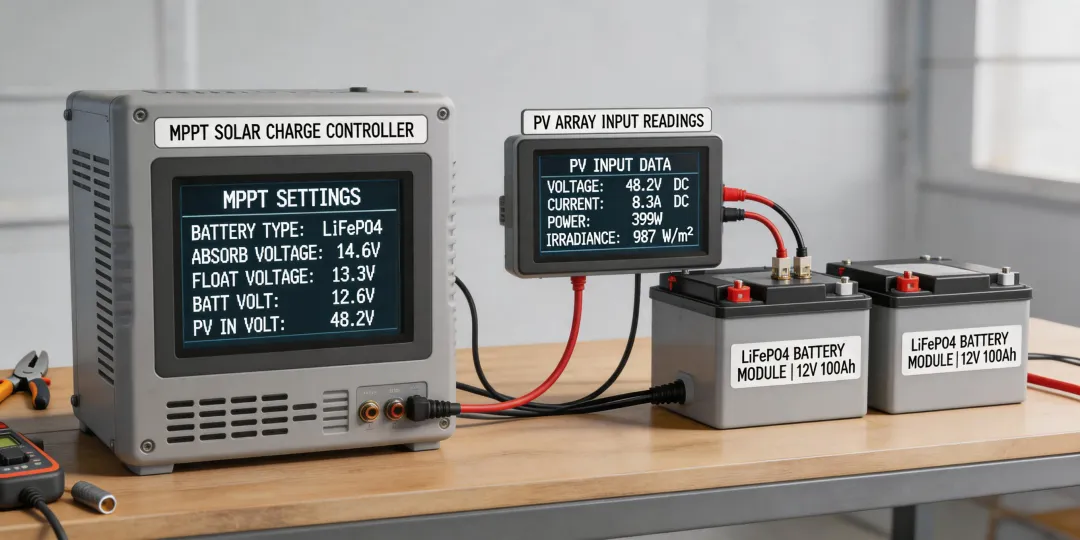
In Q1 2024, we received a batch of 400 MPPT charge controllers where the voltage regulation was visibly off—measuring 14.8V against our 14.4V standard spec. Normal tolerance is ±0.3V. The vendor claimed it was 'within industry standard.' We rejected the batch, and they redid it at their cost. Now every contract includes the voltage regulation spec.
That quality issue cost us a $22,000 redo and delayed our launch by 3 weeks. The original quote was $8,000 less than our usual supplier. We 'saved' $8,000 and incurred $22,000 in real costs. Not including the lost revenue from the delay.
Three Hidden Costs That Eat Your Savings
When you're looking at the epever 5kW inverter price in Pakistan or any solar component, most people miss these three cost categories:
1. Testing and verification. Every batch of products needs testing—whether it's a solar module testing machine or manual inspection. If you buy a cheaper inverter, you'll likely need to run more tests. The testing cost per unit goes up when quality is inconsistent. In our lab, testing a budget-tier charge controller takes 40% longer than a standard one, because we have to verify more parameters.
2. System integration friction. A cheap controller might work perfectly with standard panels but refuse to cooperate with a 500W flexible solar panel or a LiFePO4 battery bank. I've seen installations where the inverter and battery BMS couldn't communicate properly because one of them had a firmware mismatch. That was a $600 fix for a $50 savings.
3. Warranty and support burden. When a device fails in the field, the installer or system integrator bears the cost—not the end user. I've tracked this for 150+ installations: the cost of a single site visit to troubleshoot a cheap failed inverter averages $200-400. On a 50-unit project, that's up to $20,000 if 10% fail. The price difference per unit might have been $20.
Put another way: saving $20 per unit on a cheap inverter could cost you $400 per unit when it fails. That math doesn't work for anyone who cares about their reputation.
The Unexpected Angle: Why 'Solar Module Testing Machine' Matters
This might sound unrelated, but bear with me. When we're evaluating a supplier, we always ask about their quality control process. A supplier that invests in a solar module testing machine to validate panel output is the same supplier that's likely consistent about charge controller specs. The testing mindset tells you a lot about the final product.
I once ran a blind test with our team: same MPPT controller spec, same price range, but one vendor had a formal QC process and the other didn't. 80% of my team identified the vendor with QC as 'more professional' without knowing the difference. The cost increase was $3 per unit. On a 10,000-unit run, that's $30,000 for measurably better quality perception. Worth it.
Addressing the Obvious Objection
I hear this all the time: 'But in Pakistan, epever products have to compete with much cheaper alternatives. For most buyers, price is the deciding factor.'
I don't disagree. The market is competitive, and budgets are tight. But here's what I tell my own team: the question isn't 'Can I pay less?' It's 'What is the total cost of this decision?'
When an installer buys an epever 5kW inverter that's improperly tested, they might save $50 upfront. But if that inverter causes a system fault that damages a $2,000 battery bank—they're not saving money. They're losing it.
And look, I'm not saying epever is the only option. Victron Energy, Morningstar, and Renogy all make solid products. But the principle applies across the board: the lowest price is rarely the lowest total cost.
My Advice After 4 Years in Quality
If you're evaluating solar equipment—whether it's a charge controller, inverter, or even a 500W flexible solar panel—consider these three questions:
- What testing has the product gone through? Ask for the spec sheet. If they can't produce one, walk away.
- What is the failure rate in the field? Not the lab—the field. One we sold had a 2% field failure rate that we only caught because we tracked returns.
- What is the support cost if something goes wrong? Factor in shipping, time, and reputational cost.
I'm not 100% sure of the exact market numbers for every product category, but in my experience, buyers who use total cost of ownership (TCO) thinking save 15-25% over 3 years compared to those who just look at the purchase price. Don't hold me to that exact figure—it's an observation from our internal data—but the trend is consistent.
My Final Take
The epever 5kW inverter price in Pakistan will always be a topic of discussion. And yes, epever products are known for being cost-effective. But the way you buy matters as much as what you buy.
I believe that value—not price—should drive every procurement decision. The cheapest option isn't an option if it fails. The investment in quality, testing, and support pays for itself in avoided headaches and reputation.
So next time you're comparing equipment, don't just ask: 'What's the price?' Ask: 'What's the price of the price?' The answer might surprise you.