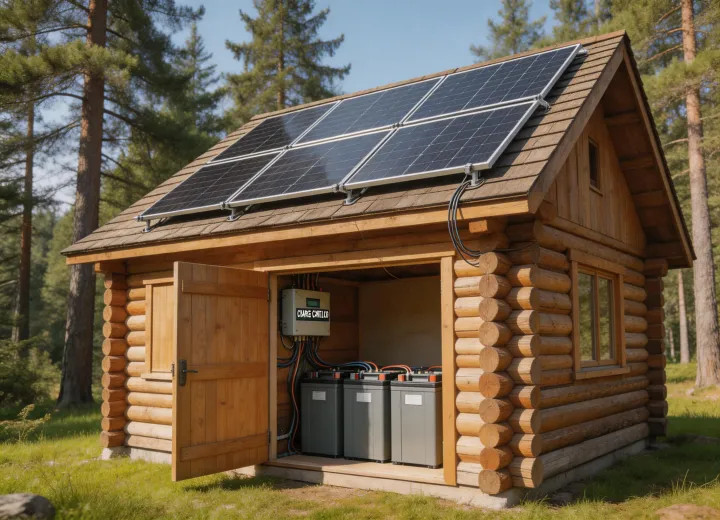
Remote homes and cabins
Small residential and cabin systems need controller settings that match daily loads, winter temperature, battery chemistry and homeowner maintenance ability.

The strongest Epever applications are not abstract energy visions. They are sites where PV input, battery storage and controlled DC or AC loads must work predictably with limited service time.
Small residential and cabin systems need controller settings that match daily loads, winter temperature, battery chemistry and homeowner maintenance ability.
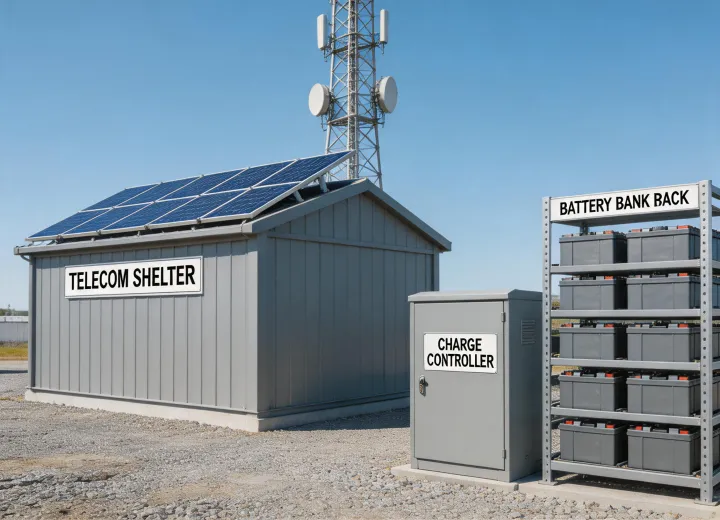
Always-on communications loads require conservative charge margins, alarm visibility and battery protection notes for sites that cannot be visited often.
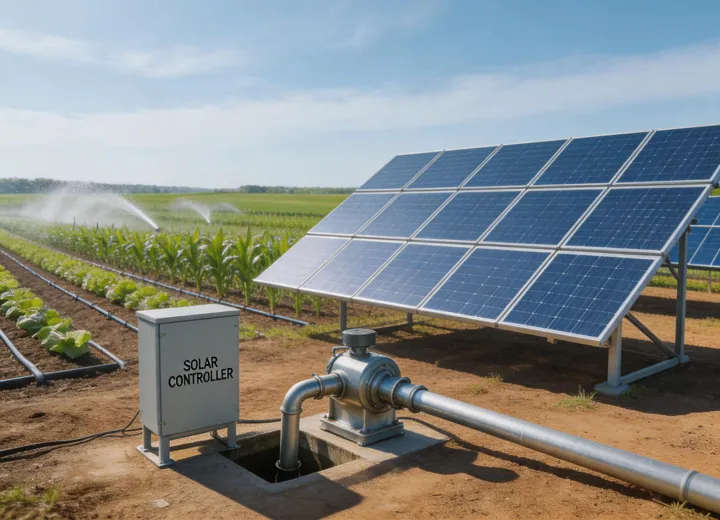
Pumps, sensors and field equipment depend on input voltage checks, enclosure planning and straightforward troubleshooting for non-specialist operators.
Across these applications, the common challenge is not simply choosing a controller with a familiar name. The buyer must know whether the PV array will remain inside the voltage window on cold mornings, whether the charge current matches the battery bank, whether the battery management system may disconnect under fault, and whether the installer can verify alarms after handover. Epever application support keeps those checks visible. In a remote cabin, that may mean balancing winter autonomy against battery cost. In a telecom shelter, it may mean preserving service records for a maintenance team. In irrigation, it may mean matching pump start behavior and enclosure protection. The format is intentionally consistent so distributors can compare projects quickly.
Off-grid and DC-coupled projects ask for both PWM and MPPT charge controllers. Each is appropriate in a different range of applications. We avoid blanket recommendations and document the trade-off so installers and system integrators can choose on engineering grounds.
Lower unit cost, simpler firmware, and adequate for small systems where the PV array voltage is closely matched to the battery bank. Best suited to compact RV, marine, and small off-grid loads under 200 W where MPPT premium is hard to justify.
Recovers 10-30% more energy across temperature and irradiance variation, accepts higher PV voltage which reduces wiring losses, and supports longer string lengths. Standard choice for systems above 200 W or where PV-to-battery voltage ratio is far apart.
Epever can share efficiency curves at multiple PV input voltages and battery voltages so the PWM-versus-MPPT choice maps to actual operating conditions.
Send site voltage, PV size, load type and operating region for a practical equipment recommendation.
Request Application Fit