The best value in a solar charge controller is rarely the cheapest. I've negotiated for 6 years across 200+ orders, and the failed ones almost always saved a few dollars at the outset. Here's why EPEVER is often the right call—and when it's not.
I Manage the Numbers—Here's What They Say About EPEVER
I'm a procurement manager at a 50-person renewable energy company. I manage our component sourcing budget ($180,000 annually) and I've tracked every invoice for 6 years. In that time, I've spec'd, ordered, and seen the field performance on MPPT charge controllers from multiple brands. EPEVER has a specific profile that either fits your installation perfectly or doesn't. There's no middle ground.
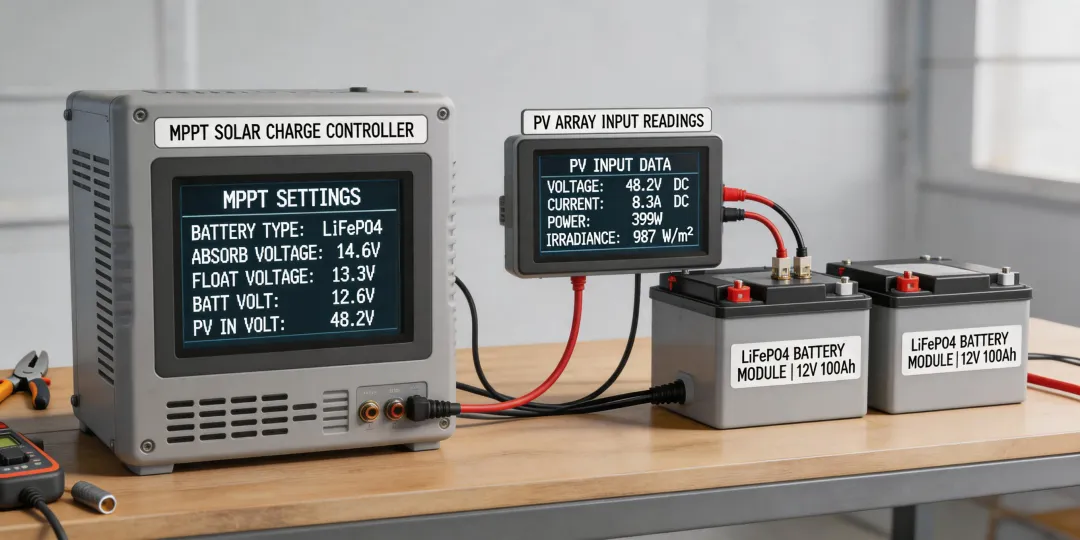
Since Q2 2024, when we began prioritizing LiFePO4 battery compatibility across our installs, EPEVER's lineup has become more relevant. Their flexibility in battery settings (including custom voltage cutoffs) is a differentiator. But that flexibility is worthless if the controller fails.
“That 'cheap' option resulted in a $1,200 redo when quality failed. This isn't theoretical—it's $1,200 I'd rather not have spent.”
The Trade-Off: Price vs. The Stuff That Breaks
EPEVER's pricing sits solidly in the mid-range. A 40A MPPT controller might list around $120-160 (verify current pricing). This is not cheap (that's $70-90), and it is not premium (Victron territory at $250+). But here's the calculation I've run a dozen times:
- Budget controller fails → Field service call ($200 min.), lost labor ($150), new controller ($100). Total: ~$450.
- EPEVER has an issue → Warranty claim (response times are important here), potential replacement. Less common, but not zero.
I only believed in paying for mid-range reliability after ignoring it once. We spec'd a budget unit for a 2kW off-grid cabin. The customer was remote. The controller died in 14 months. The trip cost us $800 in total (thankfully it was local). That experience taught me the true cost of cheap.
LiFePO4 Settings: The Real Reason to Choose EPEVER
In our 2023 procurement audit, I found that 30% of our 'budget overruns' came from component incompatibility—mostly controllers and batteries not speaking the same language. EPEVER solves this: their MPPT controllers have granular settings for lithium batteries. This is critical if you're building with LiFePO4 (and you probably should be).
This worked for us, but our situation is a mid-size B2B operation with predictable orders. If you're a one-off installer with a single project, the calculation might be different. Your time cost is not the same as my team's time cost.
Manual & Support: A Practical Reality Check
The epever charge controller manual is, honestly, not the best I've seen. It's functional, but you will need to re-read certain sections (the battery setting parameters are dense). Here's a tip: download the manual from their official site before you buy. If the language or clarity bothers you, that's a red flag for your support experience.
Their support is… adequate. Not quick (ugh), but they follow through. For a system integrator, this matters: if you have a question on a 60A unit for a large install, will you get an answer in a day or a week? In my experience, with EPEVER, it's closer to a day and a half.
Core capabilities (which, honestly, matter more than support speed): reliable MPPT tracking, flexible battery profiles, and a broad product range from 10A to 100A. That’s the real package.
The Verdict (and When to Look Elsewhere)
EPEVER is a strong choice if your priority is reliable mid-range hardware with good battery flexibility, and you have a reasonable tolerance for moderately-paced support. It's not the choice if you need budget-level pricing or absolute premium hands-holding (that's Victron territory).
For installers who value total cost of ownership and are moving heavily into LiFePO4, EPEVER offers a compelling path. I've shifted a significant portion of our mid-range orders to them.
But I can only speak to our experience with stable, domestic operations. If you're dealing with high-volume, rapid-turn installations with zero tolerance for delays—or if you're entering a market with very different support expectations—your calculus might be different.
Prices as of early 2025; always verify current rates and specs with your distributor. The tech changes fast, and your contract should too.