I'm Done Chasing the Lowest Price on Solar Components
I'm office administrator for a 25-person company. I manage all our facility and operations ordering—roughly $180,000 annually across about 12 vendors. I report to both operations and finance, which usually means I'm stuck between 'get it cheap' and 'get it working.'
Here's my take: when you're building an off-grid solar system for a commercial site, paying a premium for the right gear isn't a cost—it's an insurance policy. I know that sounds like a cliché, but after getting burned twice on this, I've got the receipts to prove it.
My go-to for charge controllers and inverters is epever. Not because they're the cheapest (they're not), but because when something goes wrong at 4 PM on a Friday, I don't have time to argue with a supplier about whether the specs were 'accurate' or just 'aspirational.'
My First Mistake: Saving $200, Losing Two Weeks
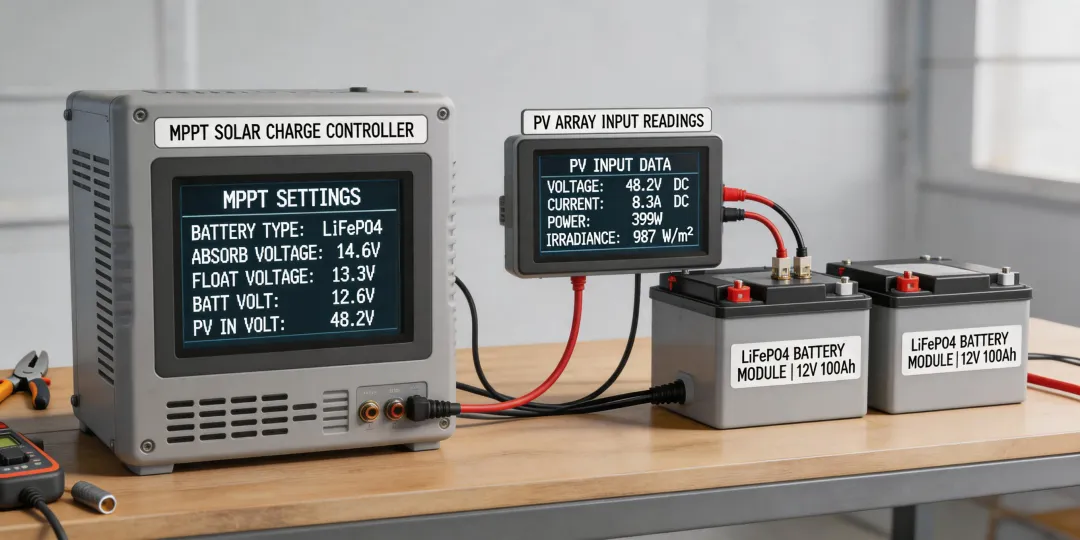
Back in early 2023, we were speccing out a solar setup for a new office in Florida. The system needed a 40A MPPT solar charge controller with lithium battery settings—non-negotiable because we were running LiFePO4 batteries. I found a controller that looked identical to the epever Tracer 40A but was $180 cheaper. Same specs on paper. I went for it.
It arrived. The manual was clearly translated with Google Translate. The battery settings didn't actually include a LiFePO4 profile—just 'User' with a vague voltage range. I spent three days trying to configure it. I said to the supplier, 'I need the lithium battery charging parameters.' They heard, 'I need the generic settings.' Result: the batteries never charged fully, and we lost a week of installation time.
I ended up ordering the epever unit anyway. The $180 savings turned into $460 in total after expedited shipping and a day of electrician time I couldn't bill. Plus, I looked bad to my VP when the project went two weeks over schedule.
The Real Cost Isn't Just the Price Tag
Honestly, I'm not sure why some vendors list specs that are mostly accurate. My best guess is they're copying from a competitor's datasheet. But when you're ordering for a commercial installation—say, a 100A MPPT solar charge controller for a critical server backup system—you can't afford 'mostly accurate.' You need the thing to actually work, and you need support that speaks your language.
That's where epever's official website and documentation matter. When I need to verify compatibility between a charge controller and a specific LiFePO4 battery, I don't guess. I check the manual on epever.com. I can actually find the PDF, look at the battery voltage table, and confirm it's what I need. That's worth something.
Compliance Isn't Optional Anymore
Here's something I didn't think about until 2024: regulatory compliance. Our Florida installation had to meet local building codes. The inspector asked for UL or CE certification on the charge controller. I had to dig up the documentation. The cheap controller? No cert. The epever unit? Clear markdown in the specs. That alone saved me from a re-inspection fee and a delayed CO.
Per FTC guidelines on advertising (ftc.gov), manufacturers must substantiate claims like 'compatible with LiFePO4.' But that applies to the US market. Some overseas sellers don't follow those rules. You get what you get. I'd rather pay for the brand that has a reputation to protect here.
So What's My Rule?
I went back and forth between the premium supplier and the budget option for about two weeks on that first project. The budget option offered 25% savings. The established option (epever) offered reliability and documentation. Ultimately I chose reliability because the project was too important to risk. But it took getting burned to really internalize that lesson.
The uncertainty of 'will it work?' is always more expensive than the certainty of paying for the right product. I've learned to treat the extra cost for a known brand as a fee for predictable outcomes. It's not a markup; it's a hedge against the hidden costs of failure.
If you're shopping for components for a solar system in Florida—or anywhere with a deadline—don't just look at the price. Look at the documentation. Look at the support. Look at whether the vendor can provide a proper invoice with certifications. If they can't, the real cost of that 'deal' might show up later when you least expect it.