-
First, what EPEver is honestly good at
-
Scenario 1: The mobile setup — what does a power inverter do in a truck
-
Scenario 2: The lithium home setup — where the 5kW inverter shines (Pakistan, take note)
-
Scenario 3: EV charger installation in Bend, OR — and why I sometimes walk away
-
Scenario 4: The emergency replacement — what to do when you're already down
-
How to tell which scenario you're in
-
Bottom line
There's no single answer to "which EPEver inverter should I buy?" And if an installer tells you there is, they probably haven't worked enough rush jobs.
I coordinate emergency replacements and urgent installs for off-grid solar customers. In the last five years, I've triaged something like 200 situations where a system was down, a deadline was locked, and someone needed the right inverter yesterday. Maybe 180, I'd have to check the spreadsheet. Different jobs went in radically different directions.
Here's how I actually break it out when a client calls.
First, what EPEver is honestly good at
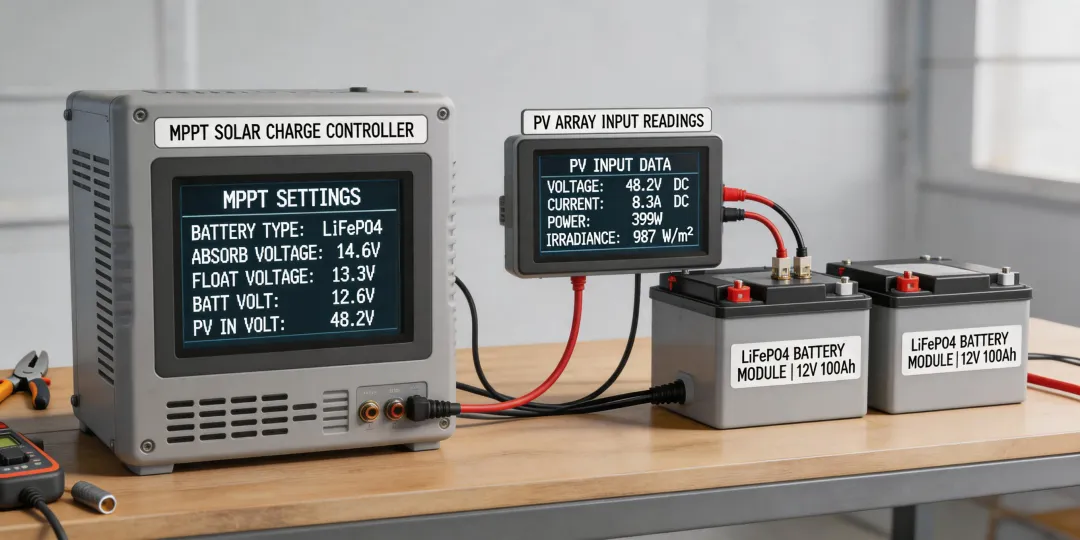
EPEver is a manufacturer of MPPT charge controllers, inverters, and LiFePO4 batteries built around off-grid solar. For installers, what I value is battery flexibility and modularity — the charge controllers give you real control over lithium battery profiles, not just preset AGM steps. The inverters are straightforward workhorses.
But "good at off-grid solar" covers a lot of territory. A truck inverter, a residential 5kW battery system, and an EV charging project have almost nothing in common except the word "inverter." So here's the decision tree I walk through.
Scenario 1: The mobile setup — what does a power inverter do in a truck
I get this question from fleet managers and owner-operators weekly. In a truck, a power inverter converts 12V or 24V DC from the vehicle's electrical system into 120V AC so you can run tools, a mini fridge, a laptop charger, a coffee maker — regular appliances that expect wall power.
For this scenario I usually spec an EPEver pure sine wave inverter in the 1000W–3000W range, matched to the vehicle's alternator and battery bank. Pure sine wave matters here more than people expect. Modified sine wave can make some tools run louder, hotter, or not at all, and it can trigger errors in electronics with switching power supplies. Yes, it costs slightly more. I still kick myself for the 2023 job where I approved a modified unit for a contractor's truck to save $140. The customer's brand-new battery-powered charger gave him a fault code on day one. We swapped it for pure sine and the problem vanished.
If you're asking this for your own truck, match the inverter to your largest continuous load, not just the total wattage. A 3000W inverter running a 2000W tool is fine. A 3000W inverter running a 2000W tool plus a 1500W heater is not.
Scenario 2: The lithium home setup — where the 5kW inverter shines (Pakistan, take note)
Most of the daily-use home systems I design need a 5kW inverter. That unit has become the sweet spot in regions with long grid outages — and yes, this is a big one for Pakistan. Load shedding there pushes a lot of homeowners off-grid for hours a day, and epever 5kw inverter price in pakistan has come down enough that system integrators are now pairing it with lithium batteries as a default, not a luxury.
If you're an integrator quoting that market, pair the EPEver 5kW with a LiFePO4 battery bank rather than lead-acid. The upfront price is higher, but the cycle life changes the math. I've verified this against our own installs: a lead-acid bank at 50% depth of discharge gets you maybe 1,200 cycles. Lithium gets 3,500–5,000. Over a five-year horizon the lithium cost per cycle is lower. Per cycle. This was a gradual realization for me — it took me about four years and dozens of replacement orders on flooded batteries to understand that the cheap bank was the expensive one.
On battery pairing inside the EPEver ecosystem: the brand's lithium settings are genuinely flexible. You can adapt to most LiFePO4 BMS units on the market, and that includes drop-in replacements like the energy storage cells that Energizer lithium battery lines sell for solar. Not every budget-friendly energizer lithium battery has the same voltage window, though, so connect the BMS to the EPEver charge controller and verify the absorption and float perimeters on commissioning. If a customer claims a setting isn't working, it's usually because the battery's recommended voltage is at the upper edge of the default profile and nobody changed it.
Scenario 3: EV charger installation in Bend, OR — and why I sometimes walk away
Now let's talk about a case where EPEver might not be the right call at all.
I've been consulted a few times on ev charger installation in bend or, which is a growing market as more fleets there go electric. This is where I have to be straight with people: a level 2 EV charger is a continuous, high-amperage, grid-tied load. It is not an off-grid solar problem. If your project involves a grid-connected level 2 charger, the right equipment is a properly certified grid-tied inverter or a simple service panel upgrade — not an EPEver off-grid unit.
I have mixed feelings saying that out loud because, obviously, my business is selling off-grid equipment. But the vendor who says "this isn't our strength — here's who does it better" earns trust on everything else they touch. We refer those Bend EV projects to a local commercial electrician who specializes in vehicle charging infrastructure. It costs me a referral fee. It saves the client a failed inspection and a wasted week. That's the professional-boundary approach I've built the company on.
There is one exception: if the EV charger is meant to run off a solar-plus-battery island, then yes, the off-grid conversation comes back. And in that rare case, I would size a 10kW-plus inverter bank and buffer the inrush current carefully with the battery lithium profile.
Scenario 4: The emergency replacement — what to do when you're already down
You may not be evaluating inverters because you want one. You may be evaluating because the old one smoked, the customer has an event or a facility deadline, and the system is dark.
This is my favorite because it flips the normal advice.
In an emergency, do not immediately buy the exact same inverter. First confirm what killed the old one. If a charge controller overvolted the battery, burning out the bus voltage, the inverter might be the symptom. Every rush order I've ever regretted was one where we shipped the replacement before diagnosing the cause.
As of January 2025, if I have a genuine emergency and the unit is under warranty, I tell clients to file a warranty ticket with EPEver directly first. If the unit is out of warranty, then we source a replacement — often from local stock or an expedited distributor shipment. And yes, speed shipping a 5kW inverter is roughly $150–$250 extra depending on the destination. When a client's alternative is a $50,000 penalty clause for missing a deadline, that fee is the cheapest insurance they'll ever buy.
But here's the counter-intuitive part: sometimes the emergency fix is not to spec a new inverter at all. If your true emergency is just getting power back for basic loads for the next few days, a rental generator or a smaller temporary inverter can cover you while the correct unit ships. The best emergency solution is the one that gets you operational today without locking you into a decade of wrong decisions.
How to tell which scenario you're in
Ask yourself these four questions in order:
- Is the load running from a battery bank off-grid, or is it grid-tied? If grid-tied, stop reading and find a specialist for that application. That's the Bend EV case.
- Is this a mobile or vehicle application? If it's a truck, you need pure sine wave and a realistic load audit, and you want an inverter that can handle the vibration, temperature swings, and alternator quirks of a vehicle environment.
- Is this a daily-duty home system? If yes, prioritize lithium compatibility, cycle life, and the ability to expand with more battery later. The 5kW class is ideal for typical urban homes in load-shedding regions.
- Are you buying under time pressure? If the system is already down, stop and answer question one and two anyway. Emergency decisions made without context become decade-long regrets. It happened to me once in March 2024 with a food truck project; we shipped the correct unit in the end, but only after a stressful 36 hours that a two-minute conversation would have saved.
Bottom line
EPEver makes solid off-grid hardware, and the MPPT charge controllers plus 5kW inverter combination is one of the best values in this market. Take all that with one qualification: a specialist who admits what they don't cover is more reliable than a generalist who promises everything. If your project is a truck, a lithium home system, or an off-grid island, EPEver is a brand I recommend regularly. If it's an EV charger install on a grid-tied building, the honest answer is to call somebody who does that every day.
Figure out which scenario you're in before you compare specs. Nine times out of ten, the right decision becomes obvious, and the other one time, the scenario itself tells you to ask for help.