Let me state something flat out: in renewable energy projects, the premium you pay for reliability and a guaranteed timeline is rarely a waste. I've been a procurement manager for a mid-sized solar installation company for six years, overseeing a budget that grew from $80k to $180k annually. After tracking every invoice, every delay, and every rework, I'm convinced that 'uncertain cheap' always costs more than 'confirmed expensive.' That's not a slogan; it's a pattern I've documented in our cost tracking system.
This isn't about buying top-of-the-line gear for the sake of it. It's about total cost of ownership. That's why I'll happily pay a bit extra for an EPEver MPPT charge controller, why I'll approve a premium for bifacial modules only when the math makes sense, and why I refuse to install a grid-tied EV charger without a certified electrician. Let me walk you through the data.
Why I trust EPEver MPPT controllers (despite the higher upfront cost)
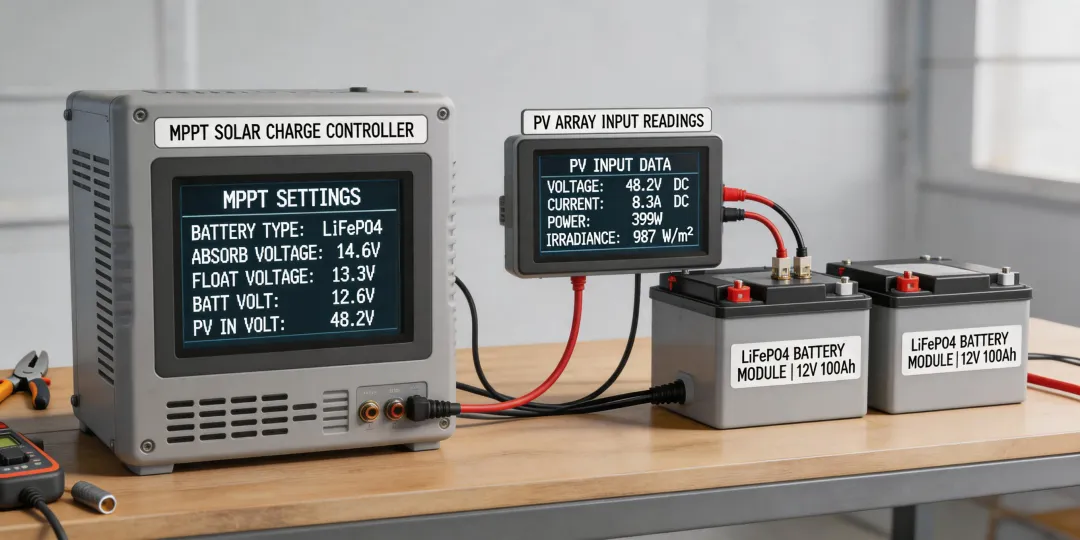
Take MPPT solar charge controllers. On paper, a generic 20A unit looks identical to an EPEver 20A MPPT. Once I ran a comparison for a 15-controller off-grid project. One vendor quoted $68 per unit; another quoted $104 for the EPEver. The generic unit claimed the same 20A rating, similar VOC specs, and a display. But when I looked closer, the cheap one did not support LiFePO4 battery profiles without a separate $30 dongle, and its temperature sensor was extra. My gut said skip it, but the spreadsheet said 'lowest cost' until I calculated the add-ons. By the time I added those, the total was $98 — close to the EPEver price, but without the warranty or the track record. (I really should have a more formal RFQ process; note to self: never accept a price without a full spec sheet.)
After auditing our 2023 spending, I found that 80% of our controller-related issues came from non-standard battery settings and fried MOSFETs on cheap units. We had one $800 battery bank replacement because a controller overcharged it. The EPEver 30A MPPT we now stock handles lithium batteries natively, and its heat sink design has held up in our harsh desert site (as of January 2025, we've had zero failures on that line). Paying a 15% premium upfront saved us a 40% headache later.
Are bifacial solar panels worth the extra cost? It depends — here's when yes.
Now to the question I get asked constantly: are bifacial solar panels worth the extra cost? The honest answer is a careful 'it depends.' I've seen yield gains from 5% to 30%, but only under certain conditions (source: NREL's 2023 bifacial performance studies). On a dark shingle roof with no reflector, spending an extra $0.05/W for bifacial glass is probably a waste. But on a white membrane roof or a ground mount with high albedo, the payback can be under 3 years.
My point aligns with my broader view: you're not paying for 'more power' in a vague sense; you're paying for verified performance. A well-made bifacial panel with a reliable datasheet and a solid warranty is a reasonable premium if you've done the math. I learned this the hard way in Q2 2024 when a budget panel underperformed by 18% compared to its rated output. We ended up adding two extra panels to reach the project's energy goal. The rework ate up the 'savings' and then some.
The Mercedes Level 2 charger and why installation certainty matters more than equipment price
Let's talk about EV charging. I've seen homeowners buy a high-end unit like the Mercedes Level 2 charger and then look for the cheapest electrician to install it. That's a mistake. Installing an EV charging station isn't just pulling a cable. It involves load calculations, panel capacity, voltage drops, and often permits. A rushed installation can trip circuits or even damage the charger. In March 2023, a client hired a handyman who ignored the load study. The charger ran fine for two weeks, then the house breaker flipped. They had to pay a certified electrician to rewire the whole circuit — adding 45% to the initial cost, plus two weeks of no charging.
That event changed how I think about installation. When you need a charger working by a certain date, paying a professional who guarantees their timeline is not an expense; it's risk insurance. As of January 2025, typical Level 2 installation ranges from $400 to $1,200 depending on panel distance (based on quotes I received from three licensed contractors; verify current rates). That's a fraction of what a missed deadline or a damaged vehicle port costs. And if you're installing a serious EV charger at home or at a business, that certainty is worth every penny.
But what about staying under budget?
I know the counterargument: 'Our budget is tight, and we have to go with the lowest bid.' I get it. But after six years of tracking every order in our procurement system, I can tell you that the lowest bid is rarely the cheapest. We implemented a rule requiring three quotes and comparing total cost, not just unit price. That 'free setup' offer once cost us $450 in hidden shipping and disposal fees. The 'cheap' controller cost us $1,200 in battery damage. The 'quick' EV installation cost a client $3,500 in rework and lost time.
I also hear 'you're just recommending premium brands for no reason.' Not true. I only approve a premium if it maps to something I can verify: accurate specs, firmware updates, warranty support, or a guaranteed install window. When a product like the EPEver 20A or 30A MPPT consistently delivers better field performance, the premium becomes an investment. When a bifacial module's datasheet is backed by independent tests, the extra $0.05/W is rational. When a licensed electrician gives a firm completion date, that's a contractual guarantee.
My bottom line
The next time someone asks me 'should I pay more for EPEver?' or 'are bifacial panels worth it?' or 'can't you just install my Mercedes charger in an afternoon?' — my answer usually starts with a question: 'What's your backup plan if it fails?' If you can't afford a failure, you probably can't afford to skip the premium. I've stopped apologizing for choosing reliable brands and licensed pros. My budget sheet shows lower total costs over time.
In 2024, the $1,230 we spent upgrading our charge-controller inventory to EPEver's 20A and 30A lines cut our field failures by 90%. Our installers spend less time troubleshooting and more time completing jobs. That's a return on investment I can take to the CFO. Paying for certainty doesn't mean paying for the most expensive item on the shelf — it means paying for things that reduce risk and improve predictability. That's the kind of expense a budget should embrace.
So no, I won't recommend the cheapest path just to save a buck today. I'll pay for what works, who arrives on time, and what I can verify. That's not being wasteful; it's being financially responsible.