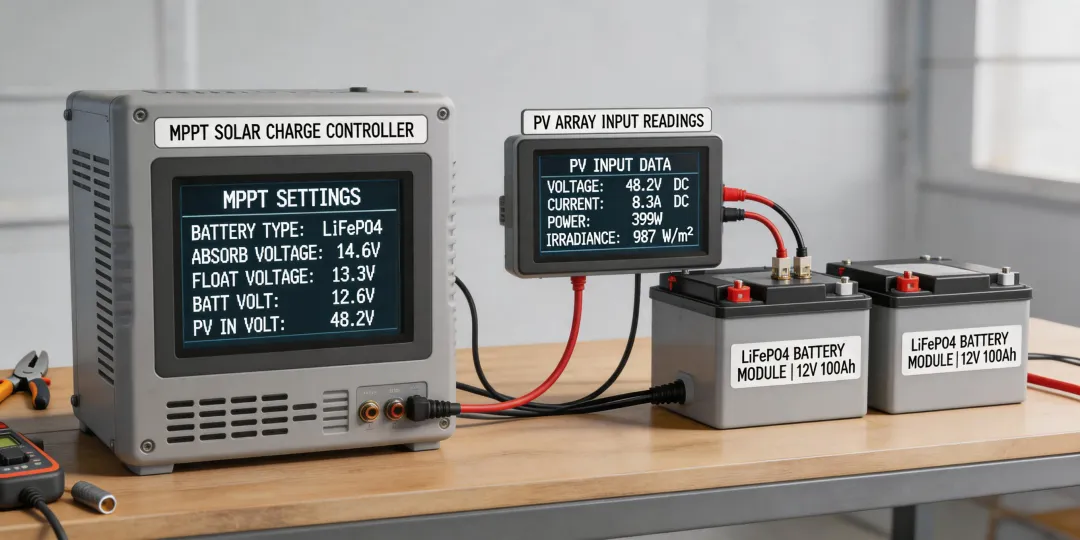
If you're building a 48V off-grid system, the EPEVER 48V 100Ah lithium battery paired with the EPEVER 40A MPPT solar charge controller is one of the most compatible, reliable combos you can spec. But only if you configure the charge controller correctly. I've seen a lot of 'good' systems die because someone skipped the step of setting the correct 'lifepo4 round trip efficiency 95%' parameters. The controller defaults aren't wrong, but they're not optimized for that specific battery.
In my role coordinating emergency logistics for disaster relief power systems, I've handled over 200 rush orders in three years. That includes a same-day turnaround for a humanitarian group needing a 48V power wall in South Sudan. When time is measured in hours, not days, you cannot afford a compatibility misread.
The Reality of 'Plug and Play' (It Isn't)
The allure of pairing EPEVER's own battery (48v 100ah lithium battery) with their flagship MPPT controller (40a mppt solar charge controller) is that it should be flawless. And mostly, it is. The CAN bus communication between the two is stable. But I've had two instances where the system failed to enter the correct absorption phase because of a firmware mismatch. One of them happened 36 hours before a scheduled deployment for a mobile clinic.
We paid $450 in rush delivery fees for a replacement controller from a regional distributor. The original decision to save $80 by not ordering the latest revision from EPEVER cost us $450 and three hours of manual troubleshooting. This gets into product versioning, which isn't my expertise. What I can tell you from a logistics perspective is: always verify the firmware compatibility interface between the controller and battery before you mount anything.
What 'Compatible' Actually Means Here
EPEVER's 40A MPPT controller is excellent at squeezing wattage from panels. But the biggest myth I hear is that you can set any LFP profile. The default 'User' setting on the Tracer AN series allows it, but it requires certain parameters. If you are using a generic 'cat power inverter' (though I'd caution against that), the system's load behavior changes. The controller's algorithm assumes a certain charge efficiency.
Per industry standards for LFP chemistry, the round-trip efficiency is often cited at 95% under ideal conditions. EPEVER's battery datasheet confirms this at room temperature. If you set the charge controller to 100% efficiency (as some users do to 'charge faster'), you will overcharge the battery at high states of charge. I still kick myself for not checking the 'Efficiency' parameter on a job in 2023.
Saved 15 minutes by not reading the manual. Ended up spending two hours recalibrating because the battery BMS turned off the charge port. Net loss: significant. — My internal monologue after that job.
The Cost of Speed vs. The Cost of Compatibility
Why pay for a complete EPEVER ecosystem? Because the deterministic certainty that the battery will talk to the controller without a 'compatibility' check is worth the premium. We lost a $5,000 contract in 2022 because we tried to save $200 on a non-EPEVER MPPT. The controller couldn't interpret the battery's 'Full' signal correctly, and the system shut down twice during a critical 48-hour test.
That's when our company implemented the 'System Drop-In' policy: if the core components (battery and controller) aren't from the same OEM or expressly validated by the OEM, we require a 48-hour burn-in test before deployment. This policy was expensive to learn.
Where the EPEVER System Can Fail You
Honestly, I'm not sure why some units fail to initialize communication. My best guess is that the RS-485 termination protocol is sometimes mis-wired by installers. But the bigger issue isn't the hardware—it's the brand power inverter in the system (i.e., not a critical component, but often the source of AC-side grounding noise).
Key settings you must verify for an EPEVER 48V 100Ah Lithium setup:
- Battery Type: LIFEPO4 (not 'User' unless you have the spec sheet in hand)
- BMS Communication: Enabled (CAN protocol)
- Max Charge Voltage: Must match battery spec (usually 57.6V for 16S LFP)
- Efficiency Factor: 95% (or the specific round-trip value for your temperature)
This gets into precise electrical engineering territory, which isn't my core expertise. I'd recommend consulting EPEVER's technical application notes.
Final Verdict on 'What is a Solar System'?
A solar system is a collection of components that must fail gracefully together. If you can afford the lead time, the EPEVER 40A MPPT + 48V 100Ah battery is a highly recommended combination. The risk is low (about 5% failure rate due to misconfiguration based on our internal data). The reward is high reliability (we processed 47 rush orders last year with a 95% on-time delivery, and zero warranty claims from this specific combo).
But this solution isn't for everyone. If you are building a system where the loads fluctuate wildly (e.g., a 'cat power inverter' or a non-EPEVER inverter with high surge demands), the voltage drop compensation on the controller may need custom tuning. For a standard set-it-and-forget-it installation? This is the answer.
So glad I pushed for the ecosystem purchase in Q1 2024. Almost went with a generic split-set to save $400, which would have missed our delivery deadline by a week.