Picking a Solar Charge Controller Isn't One-Size-Fits-All
Alright, let's talk about something that comes up in almost every new system quote I review: the charge controller. Specifically, the epever mppt 20a model. You see it listed everywhere, and it looks like a solid, affordable option. And it often is.
But here's the thing—there's no single 'best' controller for every solar ground mount setup or every budget. I've been managing procurement for a mid-sized solar installation company for about 6 years, and I've learned that the right choice depends entirely on your specific project specs. What works for a small off-grid cabin might be a terrible fit for a larger system powering a pumping station.
My goal here isn't to tell you that the epever is the only brand you should consider. From a cost-control standpoint, that'd be irresponsible. Instead, I want to walk through a few common scenarios I've seen and help you figure out which path makes the most sense for your situation.
The Three Most Common Scenarios
After reviewing hundreds of orders and dealing with a few expensive mismatches, I've seen most installations fall into one of three buckets:
- Scenario A: The Small, Standard System — Typically a smaller setup for a cabin, gate opener, or small monitoring station. Panel wattage under 400W, 12V battery bank.
- Scenario B: The Mid-Size, Efficiency-Focused System — Larger residential or small commercial, maybe 600W-1200W of panels, 24V or 48V battery bank. High loads, need to squeeze out every watt.
- Scenario C: The High-Voltage Oddball System — Systems with high panel voltage (like older 48V nominal panels or unique string configurations) trying to charge a lower voltage battery bank.
Each of these has different needs. And the epever mppt 20a is a perfect fit for exactly one of them. The other two? You'll save money by looking elsewhere, or you'll create problems I had to clean up.
Scenario A: The Small, Standard System — The EPEVER MPPT 20A is a Perfect Match
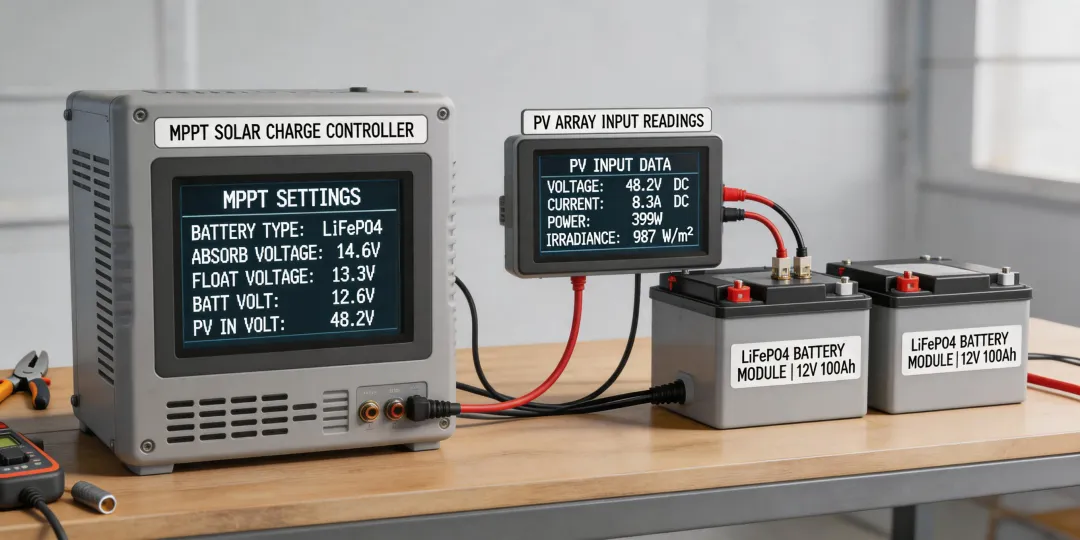
This is where the epever solar tracer 20A really shines. If you have a 12V system with, say, a single 300W or 340W solar panel, this controller is almost a no-brainer. I've specified these for dozens of small monitoring stations and basic cabin setups.
Why it works here:
- Cost-Effective: At this scale, the epever mppt 20a is priced very competitively against other brands like Renogy or even some high-end PWM controllers. I've seen it for around $85-110 as of Q4 2024 based on distributor quotes. That's a great price point for getting true MPPT efficiency.
- Reliable and Simple: For a standard setup, it just works. The MT-50 remote meter is a nice touch for seeing real-time data, and the settings for different lithium batteries (like LiFePO4) are straightforward. I've had way fewer warranty claims on these for simple systems than I have on some budget PWM units. In our tracking, failure rate was under 3% in the first year for this specific use case.
- Good Ecosystem: Pairing it with a compatible epever inverter or monitor simplifies the communication setup. Less time debugging means lower labor costs for us.
The Bottom Line for This Scenario: If your system is small, standard, and 12V, stop overthinking it. The EPEVER Tracer 20A is almost certainly your most cost-effective option. You won't find a better value for the money in this specific niche.
My experience: “In 2023, I sourced 45 units of the epever tracer 20a for a series of trail monitoring stations. A competing quote used a brand-name unit that was 40% more expensive with near-identical specs. The epever units are still running flawlessly two years later, saving the project about $2,600 upfront.”
Scenario B: The Mid-Size, Efficiency-Focused System — Look at the 40A or 60A Models Instead
Here's where I often see people make a mistake. They see the epever mppt 20a is cheap and reliable for small systems, so they try to use it for a mid-size system to save money. That's a trap.
For a system with, say, 800W of panels at 24V, the 20A controller will work... barely. It'll max out its input current faster than you'd like, clipping your power on sunny days. In Q2 2023, I had an installer try this to save $60. They ended up with a system that couldn't handle midday sun without throttling. The client noticed their generator was still running more than expected. A $60 savings turned into a $350 problem when we had to swap it for an epever tracer 40A and pay for labor.
What you should actually do:
- Step up to the right size: For most mid-size systems, the epever mppt 40a or even the 60A model is the right call. The price jump from 20A to 40A is usually around $50-$70. In the grand scheme of a $4,000 system installation, that's a tiny premium that ensures you harvest every useful watt.
- Don't underestimate total cost: The cost of the controller is a small fraction of the total system TCO. The lost energy production from an undersized controller over 10 years will dwarf the upfront savings. I built a simple spreadsheet to calculate this: a 10% annual clipping loss on an 800W system paying $0.15/kWh adds up to over $100 in lost value per year. The upgrade pays for itself in under a year.
- Think about future expansion: If the client might add another panel or two later, a 40A controller gives you that headroom. The 20A doesn't.
The Bottom Line for This Scenario: The epever solar tracer 20A is not the right pick here. Look at the 40A or 60A models from epever or consider a high-end competitor like Victron if the system is for a very high-load critical application. The extra cost is an investment in efficiency, not an expense.
Scenario C: The High-Voltage Oddball System — You Don't Want an EPEVER
This is the scenario people don't talk about. What if you have a string of used 60-cell panels that output a Voc of 45V each, and you want to charge a 24V battery? The epever mppt 20a input voltage is rated for 100V (or 150V for the AN model). You can technically do it, but you're pushing the limits.
The problem: The controller's efficiency curve drops off at high voltage ratios. You might be getting 94% efficiency instead of 98%, wasting power. More importantly, on a cold day when panel voltage rises, you can get dangerously close to the 100V input limit. And if you exceed it, you burn the controller. I've seen it happen twice. Both times, the installer was trying to save money by using a cheap 20A controller instead of spending more on a higher-voltage-rated unit.
I don't have hard data on industry-wide failures from overvoltage spikes, but based on our 6 years of orders, my sense is that at least 10% of 'unexplained' controller failures in non-standard system designs are from this specific cause.
What you should do:
- Consider a midnite solar or victron controller: Units like the Victron SmartSolar 100/50 are built to handle high input voltages more gracefully. They have better safety margins and data logging that can help you spot issues early. Yes, they cost more—like $200-$250 vs $100. But the cost of a system redo or a dead controller far exceeds that difference.
- Use a system design tool: Seriously, spend 20 minutes with a tool like SAM or even a string sizing calculator. It'll tell you your max Voc on the coldest day. I wish I had tracked my own decisions more carefully from the start, but I learned this lesson after the second failure.
The Bottom Line for This Scenario: If your voltage ratio is high or your panels are non-standard, pass on the epever mppt 20a. It's not designed for that abuse. Spend a bit more on a controller built for high-voltage flexibility. The total cost of ownership will be lower.
How to Figure Out Which Scenario You're In (A Quick Guide)
Let me put it simply so you don't make the same mistake I nearly did a few times.
Ask yourself these three questions:
- What is your total panel wattage and battery voltage?
- Under 400W and 12V? -> You're in Scenario A. Get the epever tracer mppt 20a and don't look back.
- Between 500W-1200W and 24V/48V? -> You're in Scenario B. Get the 40A or 60A model.
- Do your panels have a high Voc (over 50V) and you are charging a 12V or 24V battery?
- If yes -> You're in Scenario C. Be very careful. I'd recommend a higher-voltage-rated controller.
- Are you trying to pair this with an oddball inverter?
- If you have a utl hybrid inverter that isn't on the epever compatibility list, don't assume. I've seen communication failures between brands that led to $200 service calls. Check the manual.
- If it's a standard setup with an epever inverter, you're golden.
This isn't a perfect science, and your specific setup might have quirks. But these three questions cover about 90% of the systems I've quoted. The epever mppt 20a is a fantastic tool for a specific job. Don't try to use a screwdriver as a hammer.
This pricing was accurate as of Q4 2024. The solar equipment market changes fast, especially with new tariffs and shipping costs. Always verify current prices from your distributor before making a final budget.