-
epever Solar Questions: From a Guy Who's Triage'd a Lot of Off-Grid Setups
-
1. What's the Real Difference Between an epever 100A MPPT and a 'Cheaper' Alternative?
-
2. How Much Does an epever 5kW Inverter Cost in Pakistan? (And Is the Price the Whole Story?)
- 3. What's the Best Solar PV Monitoring System for an epeper Setup?
-
4. How Should I Approach a Solar Panel and Battery Installation for a 5kW System?
-
5. What Exactly Is a Solar Generator, and How Does It Compare to an epever System?
-
6. Can I Use an epever Controller with a Third-Party Inverter or Battery?
-
7. What's the Most Underrated Feature on an epever Charge Controller?
-
1. What's the Real Difference Between an epever 100A MPPT and a 'Cheaper' Alternative?
epever Solar Questions: From a Guy Who's Triage'd a Lot of Off-Grid Setups
I've been in the renewable energy game long enough to get the late-night panic calls. A system integrator in Lahore needs a 100A MPPT controller shipped yesterday because the client's 5kW inverter arrived, and it's the wrong voltage. An installer in Nairobi realizes the monitoring system they spec'd doesn't talk to the BMS on the new LiFePO4 battery bank.
My role? I'm the one who figures out if we can fix it within the deadline. Over the last three years, I've helped coordinate around 200 emergency orders for off-grid systems—from a single 30A controller for a remote cabin to a full 5kW setup for a telecom tower that went down. This FAQ covers the questions I hear most, plus one I wish more people asked.
1. What's the Real Difference Between an epever 100A MPPT and a 'Cheaper' Alternative?
Let's start with one I get weekly. The epever 100A MPPT charge controller (like the Tracer Series) is built for serious solar arrays—up to about 4kW on a 48V system. The key advantage? It's not just about the amp rating on the box.
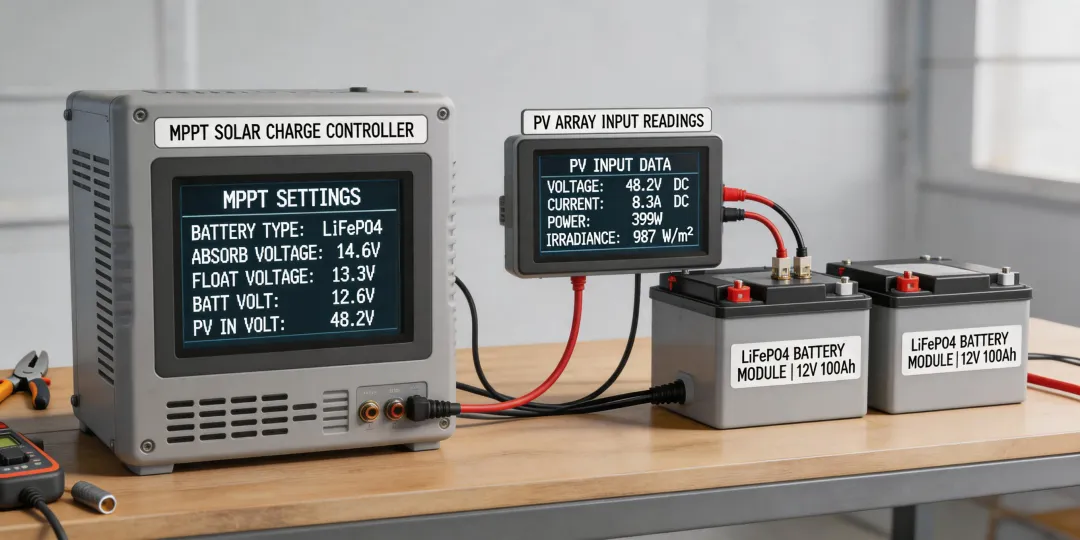
When I was starting out, I assumed any MPPT with a high amp rating would perform the same. That was wrong. The difference is in the battery management profiles, especially for LiFePO4. The epever units have dedicated settings for lithium batteries that allow you to set absorption and float voltages precisely. A generic 'lithium' profile on a cheaper unit might overcharge or undercharge your cells. I saw a $4,000 battery bank—not great.
For systems under 3kW, the 60A model is often enough. But for that 5kW inverter mentioned earlier, paired with a substantial battery bank? The 100A is the right call, especially if you plan to expand later. (pro tip: oversize your controller by 20-30%. Your future self will thank you.)
2. How Much Does an epever 5kW Inverter Cost in Pakistan? (And Is the Price the Whole Story?)
This is a hot topic. The price for an epever 5kW pure sine wave inverter in Pakistan in early 2025 is hovering around PKR 120,000 to 160,000, depending on the dealer and whether it's the standard or 'UPS' variant. But focusing only on the purchase price is a mistake. I've learned that the hard way.
Total cost of ownership includes the setup fees, any external charge controllers you need, the wiring (10 AWG minimum for that system), and potentially a separate monitoring unit. The inverter itself might be a good deal, but if you need to add a $200 WiFi module for remote monitoring, that changes the math.
One client in Karachi skipped the integrated monitoring to save money. They ended up paying more in diesel for their backup generator because they couldn't see the battery was being topped off too early. (ugh) The short answer: the price range is out there, but factor in the connectivity you'll actually use.
3. What's the Best Solar PV Monitoring System for an epeper Setup?
The epever solar controller has its own monitoring software, the Solar Station Monitor (PC) and the epever View app. It works for basic data: voltage, current, power, and daily yield. For most B2B installations, this is sufficient—if you set it up correctly.
The Common Mistake
Installers often skip the RS-485 or USB communication cable. I did this on my first few installs, thinking the controller would self-report. It doesn't. The data port is the key to getting real-time readouts. If you're managing a site remotely, you absolutely need a remote monitoring kit (the epever WiFi or GPRS module), which adds about $40-60 to the total cost.
For a solar panel battery installation where the battery bank is the primary investment, I recommend the epever View app. It gives you 24-hour logs, and you can set alerts for low voltage or high temperature. That's a huge advantage over a generic system where you only get a blinking error light.
The bottom line: invest the $50 in comms hardware. It pays for itself the first time it prevents a battery sulfation issue.
4. How Should I Approach a Solar Panel and Battery Installation for a 5kW System?
For a 5kW inverter like the epever, you're looking at a substantial battery bank—usually 48V, and at least 200Ah of capacity. The installation process isn't trivial. Here's what trips people up:
- Wire sizing: Between the panels and the charge controller, you need 6 AWG or larger for a 100A controller. Don't cheap out here. A wire gauge too small will overheat. I saw a connector melt once because of a 10% underspec. (note to self: never skip the voltage drop calculation.)
- Battery configuration: If you're using LiFePO4, you need the battery BMS to communicate with the charge controller, or set the controller to the proper absorption and float voltage. For the epever, that's usually 14.4V for a 12V battery or 57.6V for a 48V system.
- Fusing: Every circuit needs a fuse or breaker, especially between battery and inverter. I can't stress this enough.
If you're thinking, 'Can I just plug and play?' the answer is a hard no. The first time I skipped the 'verify the battery settings' step, I ended up with a 3-hour field service call to re-set the controller. (that was the one time it mattered.)
5. What Exactly Is a Solar Generator, and How Does It Compare to an epever System?
A 'solar generator' is usually a pre-assembled unit with a battery (often LiFePO4), charge controller, and inverter in one box. Think of it as an all-in-one power station. Brands like Jackery, EcoFlow, or Bluetti come to mind for smaller units. For the epever ecosystem, a 'solar generator' isn't their primary product focus. epever sells the components: the MPPT controller, the inverter, and the battery separately.
So which is better? It depends. For a single-home backup system under 3kWh, an all-in-one solar generator might be simpler. You plug in solar panels, plug in loads, and go. But for a true off-grid home or a professional installation where you need expandability and flexibility, a component-based system (like or building around epever parts) is better. You can scale the battery bank to 10kWh, upgrade the inverter later, and add more panel wattage. A solar generator is less flexible.
The catch: The vendor who says 'our solar generator does everything' might be overpromising. A specialist who says 'this product is great for 3kWh systems, but for your 10kWh, you need a modular setup' is more trustworthy. That's the expertise boundary.
6. Can I Use an epever Controller with a Third-Party Inverter or Battery?
Yes, with caveats. The epever MPPT controller is a standalone unit. It works with any 12V, 24V, or 48V battery bank. The key is the battery profile. If you're using a generic AGM battery, the default profile is fine. But if you're using a LiFePO4 from a brand that's not epever, you must enter the battery parameters manually.
I've had to do this many times: you go into the controller's menu, select 'User' mode, and enter the absorption, equalization, and float voltages from the battery manufacturer's spec. For example, a common 48V LiFePO4 bank might need 57.6V absorption and 54.4V float. If you use a generic 'lithium' setting that's set to 56V, you're leaving capacity on the table.
I should note that this applies to most quality MPPT charge controllers, not just epever. The advantage epever offers is the flexibility to make those adjustments. It means you can pair an epever controller with a Victron or Morningstar system if you're careful about voltage matching. (but that's a topic for another day.)
7. What's the Most Underrated Feature on an epever Charge Controller?
Most installers focus on the amp rating or the price. The one thing that often gets overlooked: the programmable auxiliary output. On many epever models, there's a small terminal block that can be set to trigger a load relay or an alarm under certain conditions.
For example, you can set it so that when the battery voltage drops below 11.8V (on a 12V system), it sends a signal to shut down a non-critical load. Or, you can use it as a 'load on at night' timer. It's a powerful feature for energy management, and I've seen people pay $200 for a separate load controller when the epever unit already does it.
Learn that feature set. It might save your next installation a lot of headache.