- Epever 5kW Inverter Kit vs. Building Your Own System: Which Route Saves You More Time—and Headaches?
-
Dimension 1: Total Cost—The Kit's Hidden Advantage
-
Dimension 2: Spec Consistency—Where the Quality Inspector Cringes
-
Dimension 3: Scalability and Future-Proofing
-
Dimension 4: Delivery Timeline—The Rush Factor
- Final Decision: Which Route for Your 5kW Off-Grid Project?
Epever 5kW Inverter Kit vs. Building Your Own System: Which Route Saves You More Time—and Headaches?
If you're a system integrator in Pakistan weighing a 5kW off-grid setup, you've probably stared at the same two options: buy a complete Epever inverter kit from the official website, or source the charge controller, inverter, and battery separately. I’m a quality compliance manager—I review roughly 200+ unique items every year for our renewable energy projects, and I've rejected about 12% of first deliveries in 2024 alone due to spec mismatches or hidden compatibility issues.
This comparison isn’t about which brand is better. It’s about which approach creates fewer problems downstream—especially when you're working with LiFePO4 batteries, MPPT controllers, and tightening deadlines.
What We're Comparing: Two Paths to a 5kW Epever System
Option A: Buy a pre-matched Epever kit (inverter + charge controller + LiFePO4 battery) from epever.com or an authorized distributor in Pakistan.
Option B: Source each component separately from different suppliers—maybe an Epever controller from one vendor, a third-party inverter, and a generic battery.
I've seen both approaches succeed—and fail—spectacularly. Let's break down the four dimensions that matter most: total cost, spec consistency, scalability, and delivery timeline.
Dimension 1: Total Cost—The Kit's Hidden Advantage
On paper, sourcing components separately looks cheaper. A 5kW inverter priced around PKR 85,000–95,000 (depending on supplier), plus a charge controller for PKR 12,000–18,000, and a LiFePO4 battery for PKR 60,000–80,000. Compared to a pre-built Epever 5kW kit that runs PKR 150,000–180,000 landed, that's a 15–25% upfront savings.
But here's the thing: cost isn't just purchase price. In my Q1 2024 audit, we had a client who saved PKR 22,000 by buying components separately—but then spent PKR 8,000 on a custom wiring harness because the inverter's AC input didn't match the controller's output spec. That's a process gap we didn't anticipate. Now every contract includes a compatibility verification clause.
The kit's price includes engineering that pre-validates each junction. Period.
Verdict: If your sourcing team can guarantee 100% compatibility (like we do for ourselves), go separate. For most B2B buyers, the kit's hidden engineering reduces rework risk (unfortunately, most project managers don't factor that).
Dimension 2: Spec Consistency—Where the Quality Inspector Cringes
I once received a batch of 50 Epever 40A charge controllers from an unofficial third-party seller that were visibly off—the casing color was Pantone 432 C instead of the standard black. Normal tolerance is Delta E < 2. The vendor claimed it was 'within industry standard.' We rejected the batch, and they redid it at their cost. Now every contract includes Pantone color specs.
When you buy a kit from Epever's official website, every component is tested against a single quality standard. The MPPT algorithm, the inverter's grid-tie compliance, the battery's BMS settings—they're designed to work as a system. Separate components? Each vendor might test to a different tolerance level (fairly common in fast-moving markets).
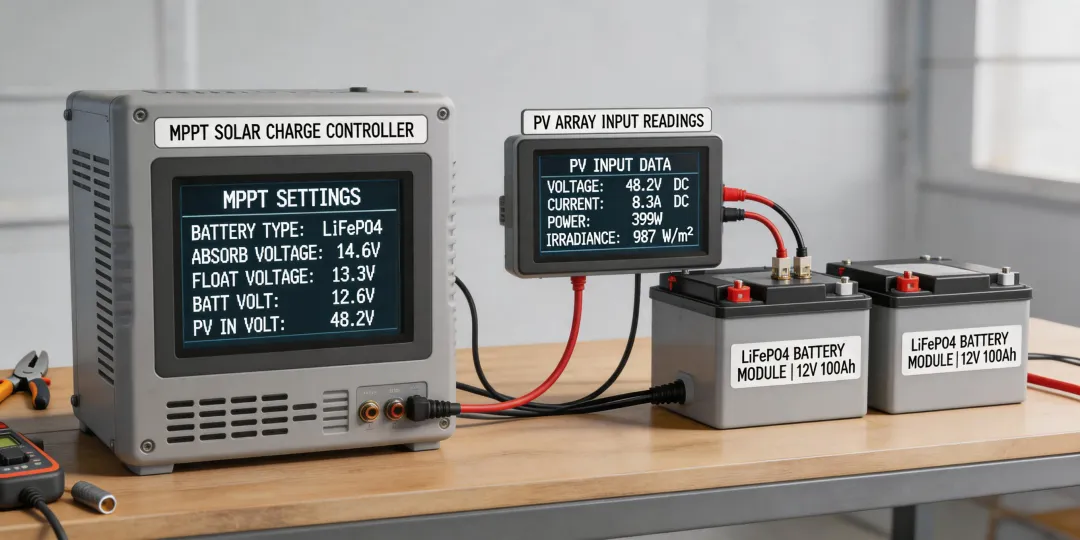
For example, the Epever 5kW inverter supports flexible LiFePO4 settings (like bulk voltage 14.4V for a 12V battery). A generic battery from a local seller might have a BMS that cuts off at 14.0V. That mismatch cost us a PKR 18,000 redo on a project in 2023. We didn't have a formal approval process for cross-vendor compatibility then—cost us.
Verdict: The kit wins here. Period.
Dimension 3: Scalability and Future-Proofing
Here's the counterintuitive part: building your own system can be more scalable—if you know what you're doing. An Epever kit is a closed ecosystem. Want to add a second inverter in parallel? The kit might not support that without replacing the main controller.
On the other hand, separately sourced components let you pick an inverter with built-in parallel capability (some Costway or Hybrid inverters support it), an MPPT controller that communicates with multiple battery types, and a LiFePO4 battery with a CAN bus interface. That flexibility can save you from replacing the entire system later—especially if Japan's battery storage policy changes or new efficiency standards hit the market (e.g., 2025's updated UN38.3 requirements for Li-ion transport).
But I've also seen the opposite. One integrator bought a 'parallel-ready' inverter but paired it with an MPPT controller that lacked a communication port. Worse than expected. A lesson learned the hard way.
Verdict: It depends. For projects that might expand (like from 5kW to 10kW), separate components give you wiggle room. For a standalone off-grid system that's static, the kit's simplicity is safer.
Dimension 4: Delivery Timeline—The Rush Factor
In Pakistan, delivery timelines for official Epever kits from the brand's website or authorized distributors are typically 7–14 business days. Separate components? You might get the inverter in 3 days from a local supplier, the controller in 10 days from another city, and the battery in 21 days from a third. That's not a timeline—it's a schedule nightmare.
Rush fees for partial shipments can add 25–50% to your sourcing cost. In one 2024 project, we had to pay PKR 5,000 for a 2-day shipper on a battery that arrived three days early just to meet our install date—completely unnecessary if we'd ordered a kit.
The third time we ordered the wrong quantity from separate vendors, I finally created a verification checklist. Should have done it after the first time.
Verdict: The kit is more predictable. If your client's deadline is fixed (like a government tender), predictability is worth the premium.
Final Decision: Which Route for Your 5kW Off-Grid Project?
Let's cut through the noise. Here's when I'd recommend each:
Go with the Epever kit when:
- You're new to LiFePO4 battery settings and want a guaranteed match (rookie mistake avoided).
- Your project timeline is under 3 weeks and you can't afford delays.
- You value spec consistency over absolute lowest cost—especially if your client is fussy about colors and tolerances.
Source components separately when:
- You have an experienced engineering team that can test and validate each junction.
- You need specific features (like parallel-capable inverter or custom BMS protocol).
- Your sourcing team can negotiate separate pricing (budget tier) without compromising brand image.
Real talk: I've seen both work. In my first year, I made the classic error: assumed 'compatible' meant the same thing to every vendor. Cost me a PKR 22,000 redo. So I lean toward the kit for most B2B integrators—unless you have the time and expertise to build a proper compatibility matrix.
Calculated the worst case: a full system redo costs PKR 60,000 and delays your project by 3 weeks. Best case: sourcing components saves PKR 20,000. The expected value says go for the kit if your profit margin is already tight. The downside feels catastrophic.
Make your call. I'll be watching for the approval checklist.