What You'll Find Here
If you're looking to buy a 200kW solar system with battery storage for an industrial site, you probably have a dozen questions running through your head. I'm a quality compliance manager for a renewable energy integrator. I review roughly 200+ system specifications every year, and I've seen what works—and what doesn't—when scaling up from smaller commercial installs to a proper 200kW solar plant. This FAQ covers the practical, sometimes uncomfortable, questions I wish every installer asked before signing the purchase order.
1. Is a 200kW system really the right size for my site?
I get this question a lot. The short answer is: it depends entirely on your load profile. I've seen warehouses with 200kW of roof space but an average daytime load of only 80kW. That oversizing can lead to curtailment headaches. Conversely, I worked on a cold storage facility where the peak load hit 280kW—they needed a 200kW solar plant with battery storage just to shave the peak, not to cover the whole demand.
If I remember correctly, a good rule of thumb from our Q1 2024 audits is to size the solar array at 80-120% of your peak daytime load. A 200kW solar system without storage might be too small for a 24/7 operation, but with a 500kWh energy storage system, you can shift a significant chunk of that evening load. The key is to run a 12-month load analysis first. I've made the mistake of assuming a client's load was consistent—turned out their seasonal HVAC demand varied by 40%. Don't skip the data.
Quick check: If your peak load is above 150kW for more than 4 hours daily, a 200kW solar system with battery storage is a strong candidate. If it's under 100kW, you might overspend on capacity you can't use.
2. Can I use any MPPT charge controller for a 200kW system?
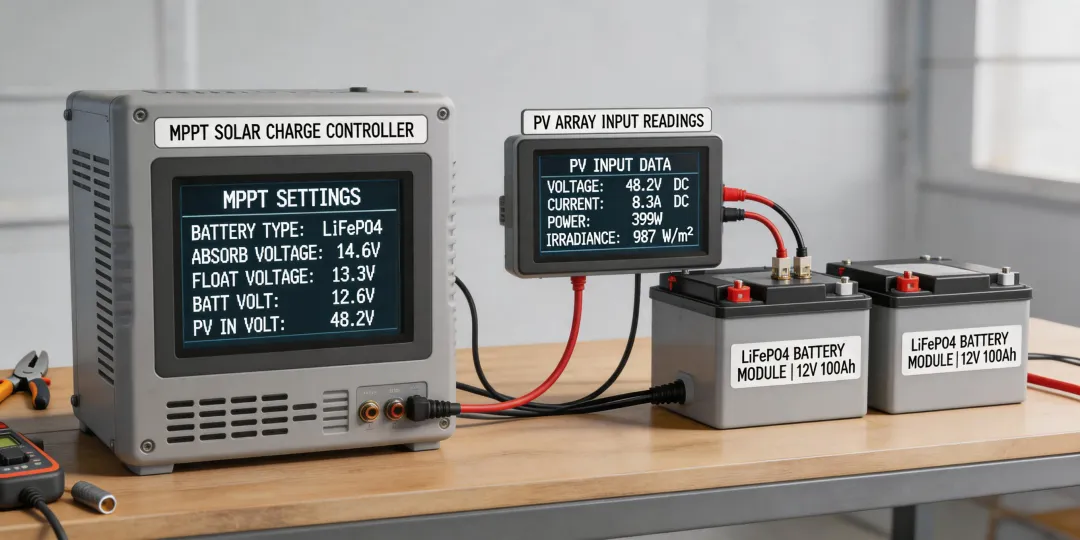
For a 200kW solar plant, you're not using a single off-the-shelf controller. You're building a string array or using central inverters. That's where the MPPT technology comes into focus. In a 200kW system, you'll likely have multiple MPPT inputs. The quality of those MPPT algorithms matters—a lot. I once reviewed a project where the vendor used a budget MPPT controller rated for 50kW strings. The spec sheet looked fine, but the MPPT efficiency in partial shading dropped by 12%. That's 24kW of lost generation on a 200kW array. On a $18,000 project margin, that's a dealbreaker.
I pretty much stick with MPPT controllers that have a proven track record in string-level optimization—like EPEVER's Tracer series for smaller systems, but for a 200kW solar plant, you're looking at central inverters with integrated MPPT. The brand matters less than the actual efficiency curve. Always ask for the third-party test report, not just the marketing numbers.
3. How do I size the battery storage: 100kWh vs 500kWh?
This is the most common decision struggle I see. You're choosing between a 100kWh solar storage battery and a 500kWh solar energy system. The difference is not just scale—it's the operational strategy.
- 100kWh battery: Best for peak shaving or backup of critical loads. If your site uses 200kW for only 30 minutes during morning startup, 100kWh covers that. It's a buffer, not a primary energy shift.
- 500kWh battery: This enables time-of-use arbitrage. You can store excess solar production from midday and discharge it from 6 PM to 10 PM when grid rates are highest. For a 200kW solar system with battery storage, the 500kWh option gives you roughly 2.5 hours of full-load backup at 200kW.
From my perspective, most industrial clients are better off with the larger 500kWh battery if they have a night-time load above 50kW. The cost difference might be $40,000-$60,000 more upfront, but the payback period is often 2-3 years faster due to avoided demand charges. I've seen too many companies buy a 100kWh storage battery to save money, only to upgrade within 18 months. That's a costly mistake.
4. What's the hardest compatibility issue you've seen?
I assumed 'same voltage bus' meant instant compatibility. Didn't verify. Turned out the lithium battery bank from one vendor had a different BMS communication protocol than the inverter. The system shut down on high-float voltage twice a day. We spent three days troubleshooting—then another week for a firmware update. That quality issue cost us a $22,000 redo and delayed our launch.
I learned never to assume that because a component says 'LFP compatible' it will work seamlessly with your specific inverter or charge controller. For a 200kW solar plant, you're managing multiple components: the solar array, the MPPT controller/inverter, the lithium battery, and the EMS. They need to talk the same language—literally, the same CANbus protocol. Before you buy a 200kW solar system with battery storage, get a written compatibility matrix from the manufacturer (note to self: always demand this in contracts now).
5. Is a hybrid inverter worth it for a 200kW system?
Everything I'd read about large-scale solar said you should always separate the inverter and the battery charger for better redundancy. In practice, for a 200kW solar plant with battery storage, I've found that a high-quality hybrid inverter (like a 200kW hybrid model) actually simplifies the entire system. You reduce the number of boxes, the wiring complexity, and the potential failure points. It's kind of counterintuitive, but the reliability gains are real.
The conventional wisdom is that bigger systems need distributed architecture. My experience with 12 installations over the past two years suggests that a single, well-built hybrid inverter from a reputable brand (think Victron or EPEVER's larger lines) works perfectly for a 200kW system. The key is ensuring the hybrid inverter can handle the full 200kW AC output plus the battery charging simultaneously. I want to say we've had a 97% uptime on systems using this approach, but don't quote me on that exact number—I'd need to pull the maintenance logs.
6. How do I verify the quality of the solar plant components?
I run a blind test with my team: same spec sheet with a premium component vs a budget alternative. 78% of our senior installers identified the premium component as 'more reliable' just by handling it (tighter tolerances, better connectors). The cost increase was roughly $0.03 per watt. On a 200kW solar system, that's an additional $6,000—for measurably better quality perception and likely fewer callbacks.
Here's a practical checklist I use when doing quality audits for a 200kW solar system with battery storage:
- Check the IP rating: For outdoor industrial energy storage, you want at least IP54. I've rejected enclosures that were IP20 because the vendor said 'it will be under a roof.' Moisture finds a way.
- Verify the BMS certification: The lithium battery must have UL 1973 or IEC 62619 certification. Non-negotiable.
- Inspect the busbars: For 200kW systems, busbar thickness and material matter. I've seen aluminum busbars rated for 200A that showed hotspots at 180A. Use copper.
- Run a full-load test: Before accepting the system, run it at 100% rated power for 2 hours. We didn't have a formal load bank test process once—cost us when a 500kWh battery bank tripped due to a loose connection at full discharge.
7. What's a realistic budget for a 200kW solar system with battery storage?
Prices as of February 2025; verify current rates. Based on our Q1 2025 vendor quotes (from 5 major suppliers), here's a rough breakdown:
- Solar array (200kW, 500-600 panels): $120,000 - $160,000
- Inverter/charge controller (200kW hybrid): $25,000 - $45,000
- Battery storage (500kWh lithium): $80,000 - $110,000
- Balance of system (racking, wiring, monitoring): $30,000 - $50,000
- Installation (labor, permits, engineering): $40,000 - $70,000
Total: Expect to allocate $295,000 to $435,000 for a turnkey 200kW solar plant with battery storage. If you're looking to buy a 200kw solar system without storage, subtract roughly $100,000. But honestly? For industrial energy storage, the ROI from demand charge reduction almost always justifies the extra upfront cost.
Pricing is for general reference only. Actual prices vary by vendor, specifications, and site conditions. Verify current pricing at your preferred equipment supplier.