I've been in quality management for the renewable energy industry for over 4 years now. In that time, I've reviewed roughly 200+ unique component specifications annually—charge controllers, inverters, battery management systems—the whole ecosystem. And if there's one thing I've learned, it's this: there is no universal 'best' off-grid inverter setup. What works for a weekend-warrior RV setup will be a disaster for a specialized 16V system, and vice versa.
So when someone searches for terms like 'epever charge controller', 'rv solar inverter charger', or 'what is an off grid inverter', they're usually trying to solve one of three very different problems. Let's break them down.
The Three Common Scenarios
In my experience, the question of 'what inverter should I get' falls into roughly three camps. Trying to treat them all the same is where most of the costly mistakes happen.
Scenario A: The Standard Off-Grid Cabin or Backup System
This is the most common scenario. You have a remote cabin, a workshop, or you're building a home backup system. You need a reliable, efficient inverter that can handle daily loads—lights, a fridge, maybe a well pump—without fuss.
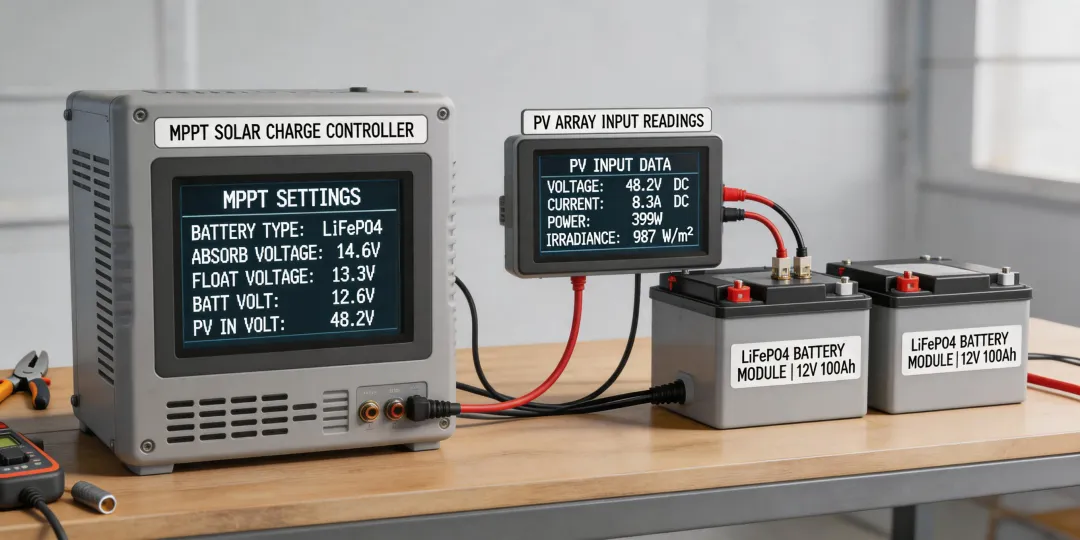
For this, a high-quality MPPT charge controller paired with a pure sine wave inverter is the way to go. Something like an EPEVER Tracer series paired with an EPEVER inverter is a solid, integrated solution. The key here is compatibility. You don't want mismatched components. I've seen setups where a perfectly good inverter was paired with a cheap PWM controller, and the system never performed. The components just weren't talking to each other right.
My recommendation: Go for an integrated ecosystem from a single reputable brand. EPEVER's charge controllers and inverters are designed to work together. This isn't about brand loyalty—it's about reducing variables. When something goes wrong, you call one support line, not two companies pointing fingers.
Scenario B: The RV or Mobile System
This is where things get interesting, and where a lot of people go wrong. An 'RV solar inverter charger' is a different beast. In an RV, space is tight, weight matters, and you're dealing with a moving vehicle. Vibration, temperature swings, and limited ventilation are real issues.
What most people don't realize is that a standard off-grid inverter designed for a stationary cabin often fails in an RV within 18 months. The internal components loosen, the cooling fan clogs faster, and the firmware doesn't handle the fluctuating battery loads from a vehicle alternator well.
Here's something vendors won't tell you: many 'RV-ready' inverters are just standard units with a different sticker. I rejected a batch of 200 units from a supplier last year because the vibration dampening wasn't up to our 0.5G testing spec. They claimed it was 'within industry standard.' We made them redo it.
My recommendation: Look for an inverter that explicitly mentions vibration resistance and low-frequency charging for alternators. EPEVER's inverter chargers are actually designed with this in mind, which is why you see them in a lot of custom van builds.
Scenario C: The Specialized System (e.g., Tesla Power Inverter 16V)
This is the edge case, and it's where you need to be brutally honest about whether your vendor can actually help you. A 'tesla power inverter 16v' setup is not a standard application. This usually involves a specialized device for an EV, a custom embedded system, or a very specific voltage requirement.
Here's the thing: a standard MPPT charge controller or off-grid inverter is designed for 12V/24V/48V battery banks. A 16V system is in a weird no-man's land. You're either looking for a custom solution, or you're misreading the specs on a standard component.
One of my biggest regrets: not being clearer with a client who wanted to power a specialized pump from a 16V battery. We tried to adapt a standard 12V inverter system with a boost converter. It worked for 3 weeks before the converter fried. The client was unhappy, and we had to source a proper 16V system from a specialist. It cost us a $22,000 redo and delayed their launch.
The vendor who says, 'This isn't our strength—here's who does it better,' earns my trust for everything else. If you're looking for a 16V solution, don't expect a standard solar brand to have the perfect off-the-shelf answer. You need an electrical engineer who specializes in low-voltage DC systems.
How to Know Which Scenario You're In
This is the part where you need to do a little self-diagnosis. Ask yourself three questions:
- Is your system stationary or mobile? Mobile = vibration and alternator charging. This changes everything.
- What is your battery voltage? 12V? 24V? 48V? Something weird? If it's not a standard multiple of 12, you're probably in Scenario C.
- Who is your installer? Are you a DIYer, or are you working with an installer who has a brand preference?
If you're in Scenario A, an integrated EPEVER system is a no-brainer. If you're in Scenario B, pay special attention to the physical build quality and vibration specs. If you're in Scenario C, stop searching for standard inverters and find a specialist.
Honestly, most DIYers I talk to are actually in Scenario A but think they need Scenario B because they're 'off-grid.' Don't overcomplicate it. A solid MPPT controller and a pure sine wave inverter from a reliable brand like EPEVER will serve you well for years.
What I've seen, more often than not, is that people buy an inverter that's over-engineered for their needs (Scenario B for a cabin) or under-spec'd (Scenario A for a van). Getting the scenario right first is the single best thing you can do to avoid a costly redo.