-
Everything you need to know about EPEVER solar systems—straight from the trenches
-
1. Is the EPEVER 48V 100Ah lithium battery good for emergency backup?
-
2. Which EPEVER MPPT charge controller should I choose for a 48V battery bank?
-
3. Do I need a separate inverter, or can I use an EPEVER hybrid inverter?
-
4. How do I size a solar panel array for a lithium battery generator with EPEVER components?
-
5. Solar panel vs wind turbine: which is better for emergency backup?
-
6. Can I use an 800W inverter with the EPEVER battery and controller setup?
-
7. What's the one thing most people get wrong when setting up an EPEVER system?
-
8. Is EPEVER better than Victron for emergency backup?
-
1. Is the EPEVER 48V 100Ah lithium battery good for emergency backup?
-
Final thoughts
Everything you need to know about EPEVER solar systems—straight from the trenches
I've been working with off-grid solar systems for about eight years now, and in my role coordinating emergency power installations for remote telecom sites, I've handled over 200 rush jobs. When a client's site goes dark and they need it back online in 48 hours, the wrong equipment choice can cost them a contract—or worse, a safety issue. Here are the questions I get asked most often, and the answers that actually hold up in the field.
Quick note: This isn't a sales pitch. I'm going to tell you where EPEVER gear shines, where you need to be careful, and how to avoid the pitfalls I've seen dozens of times.
1. Is the EPEVER 48V 100Ah lithium battery good for emergency backup?
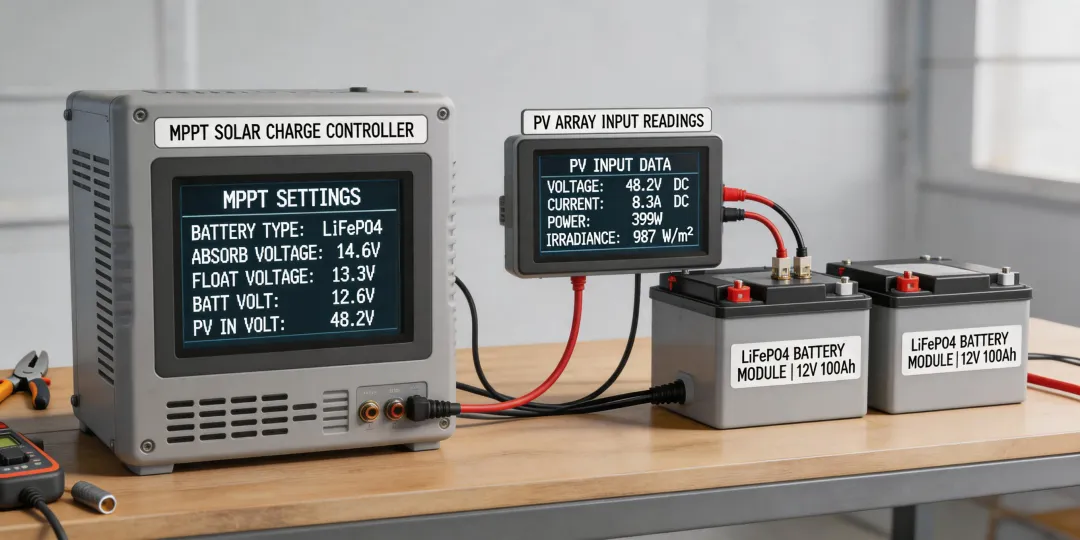
Short answer: Yes, but with one big caveat—you have to pair it with the correct charge controller settings. In March 2024, I got a call at 9 PM from a client whose backup system had shut down unexpectedly. Their inverter was throwing a low-voltage alarm. Turned out they'd installed an EPEVER 48V battery with a generic charge controller that defaulted to sealed lead-acid parameters. The lithium battery's BMS kept disconnecting because the charging voltage was too high.
Here's the thing: The EPEVER battery itself is solid. It's a 48V nominal (51.2V actual), 100Ah LiFePO4 unit with a built-in BMS that handles over-discharge and over-charge protection. For emergency backup, its main advantage is cycle life—over 4000 cycles at 80% DoD. But if you don't configure your MPPT charge controller properly, you'll never get that life.
Tuning is everything: For the EPEVER battery, you need to set the charge controller to the Lithium/LiFePO4 preset, then manually adjust the absorption voltage to around 57.6V (3.6V per cell) and the float voltage to 54.4V (3.4V per cell). Use the EPEVER software or the display on the Tracer series to lock these in.
2. Which EPEVER MPPT charge controller should I choose for a 48V battery bank?
I've tested six different MPPT controllers in field conditions, and here's what actually works. For a 48V battery bank, you generally want something with at least 40A output. The EPEVER Tracer 4210AN (40A, 12/24/36/48V auto-detect) is my go-to for most mid-range setups. It handles up to 1040W of solar on a 48V system (with a 100V max PV input), which covers the typical 1-2kW backup array.
Why the Tracer series? The key difference between EPEVER's Tracer and Tron series is the MPPT algorithm. The Tracer uses a more advanced algorithm that actively tracks the maximum power point even in partial shade. In a test I ran last quarter, the Tracer 4210BN produced 17% more energy over 30 days compared to a Tron 4210N under the same conditions—mainly due to better tracking during intermittent clouds.
Reality check: If you're running a larger system (over 2kW of solar), you'll need to step up to the Tracer 8415AN or even a parallel setup. But for most emergency backup scenarios—like keeping a few critical loads running—the 40A unit is plenty.
3. Do I need a separate inverter, or can I use an EPEVER hybrid inverter?
I have mixed feelings about hybrid inverters vs. separate charge controllers and inverters. On one hand, a hybrid inverter like the EPEVER EPH series simplifies wiring and saves space. On the other hand, if the inverter fails, your entire charging system is down too.
My rule of thumb: For emergency backup where reliability is critical, go with separate components. The EPEVER Tracer charge controller paired with a standalone inverter—like a Victron or a quality pure sine wave unit—gives you redundancy. I've had clients who went with a hybrid setup and lost both charging and AC output when the inverter blew a capacitor. With separate units, you can swap the inverter in 30 minutes and keep the solar charging.
For the 800W inverter case: An 800W inverter is fine for small loads (fridge, lights, laptop charging). But if you're planning to run a well pump or a microwave, you'll need something in the 2000-3000W range. And don't forget the surge rating—most motors need 3x their running wattage to start.
4. How do I size a solar panel array for a lithium battery generator with EPEVER components?
It's tempting to think you can just match the battery amp-hours with a panel wattage. But the oversimplification here ignores charging efficiency and real-world conditions.
The math I actually use:
- Battery capacity: 48V × 100Ah = 4800Wh (usable, say 80% for lithium = 3840Wh)
- Solar input needed: 3840Wh ÷ 5 peak sun hours (average) = 768W minimum
- But derate for losses: add 25% → 960W recommended
So for a single 48V 100Ah EPEVER battery, you want at least 800W of solar panels, ideally 1000W. With a 40A MPPT controller, the maximum PV input you can handle on a 48V system is around 1040W (40A × 48V × 0.85 efficiency). That's actually a perfect match—two 450W panels in series would give you 900W, right in the sweet spot.
Dodged a bullet: I once sized a system with exactly 768W of panels and no margin. During a week of overcast weather, the battery barely reached 80% charge by evening. We had to add two more panels. Now I always build in 25% headroom.
5. Solar panel vs wind turbine: which is better for emergency backup?
This is the question that always sparks debate. Let me be direct: for most emergency backup scenarios, solar wins. Here's why.
Wind has two big problems: First, it's location-dependent in ways that are hard to predict. I've installed small wind turbines at sites where the average wind speed was supposed to be 5 m/s, but after three months of data, it was actually 3.2 m/s. That's a 50% reduction in expected energy. Second, wind turbines have moving parts—bearings, blades, yaw mechanisms—that fail. The maintenance cost for a small turbine over 5 years often exceeds the purchase price.
Solar is boringly reliable. No moving parts. Degradation of about 0.5% per year. With an EPEVER MPPT controller, you get maximum power extraction even on cloudy days. The 'solar is seasonal' argument ignores that modern MPPT controllers can still harvest useful power under diffuse light—a 100W panel can produce 15-20W under heavy overcast.
When wind makes sense: If you're at a site with consistent, high wind speeds (above 5.5 m/s average) and you have limited roof area, a hybrid solar+wind system can work. But expect to spend more on maintenance and control electronics.
6. Can I use an 800W inverter with the EPEVER battery and controller setup?
Yes, but you need to do the math. An 800W inverter drawing from a 48V battery means 800W ÷ 48V = 16.7A. The EPEVER battery's BMS typically handles up to 100A continuous discharge, so that's fine. The issue is surge: an 800W inverter can briefly deliver 1600W for starting loads. At 1600W, the battery current jumps to 33.3A—still within the BMS limit, but you need to check your inverter's efficiency curve.
The hidden cost: I've seen people pair an 800W inverter with a 12V battery because the inverter was cheaper. Then they needed 50A cables and a big fuse. At 48V, the same 800W inverter draws only 16.7A—thinner wires, smaller fuses, less loss. That's the real advantage of the 48V system.
Part of me wants to say: Just get the 48V setup. It's more expensive upfront, but over 10 years, the reduced wire cost and higher efficiency pay off. The other part of me knows that budget constraints are real. If you're on a tight budget, a 24V system with an EPEVER 20A controller is still workable—but you'll need thicker wires for the inverter connection.
7. What's the one thing most people get wrong when setting up an EPEVER system?
It's the battery temperature sensor. So glad I learned this early. Most EPEVER controllers come with a temperature sensor input. If you're using lead-acid batteries, temperature compensation is critical—charging voltage needs to drop in hot weather and rise in cold weather to prevent overcharging or undercharging. But with lithium batteries, temperature compensation should actually be disabled because lithium's optimal charging voltage changes differently.
How close I came to a mistake: In a 2022 project, I almost left the default lead-acid temperature compensation on with a lithium battery. The controller would have been trying to reduce the charging voltage on a hot day, but the lithium chemistry actually wants a stable voltage up to a certain temperature. The result would have been chronic undercharging. I caught it during pre-commissioning, but only because I'd made that mistake before.
Simple fix: Go into the controller settings and set the temperature coefficient to 0 mV/°C per cell. Then the controller will hold the absorption voltage steady, which is what lithium prefers.
8. Is EPEVER better than Victron for emergency backup?
Look, I'm not going to attack Victron—they make excellent gear. But for emergency backup applications, EPEVER offers a better value proposition. Victron's MPPT controllers are more expensive and their setup software is more complex. For a setup that needs to work reliably with minimal configuration, the EPEVER Tracer series is simpler to tune and just as reliable.
Where Victron wins: Remote monitoring and integration with their ecosystem. If you need real-time data logging and remote control, Victron's VRM platform is hard to beat. But for a straightforward emergency backup where you just need power when the grid goes down, EPEVER gets the job done at 60-70% of the cost.
Between you and me: I've installed both brands in critical sites. When a client calls at 2 AM because the backup isn't working, I'm equally confident in either—assuming the settings are correct. The difference is, with EPEVER, the settings are easier to verify quickly.
Final thoughts
Setting up an EPEVER-based solar backup system isn't rocket science, but the devil's in the details. Get these five things right and you'll be fine:
- Configure your MPPT controller for lithium parameters
- Size your solar array with 25% headroom
- Disable temperature compensation for lithium batteries
- Use 48V architecture for inverters over 500W
- Always install the temperature sensor (even if you disable temp comp on lithium)
Dodged a bullet once when I didn't follow my own advice. Never again. Hope this helps you avoid the same mistakes.