-
1. How do I set up an epever charge controller for a LiFePO4 battery?
-
2. epever 30A MPPT vs 40A: Which one for a medium off-grid system?
-
3. Can the epever Tracer 4210AN handle a 48V battery bank?
-
4. What’s a ‘real’ hybrid inverter? And is the cheapest hybrid inverter worth it?
-
5. Solar inverter Philippines: What should I look for?
-
6. How to charge a 12V LiFePO4 battery with solar panels (step-by-step)
-
7. How do I know if an epever component is compatible with my existing system?
-
8. Should I buy the cheapest hybrid inverter or invest in a known brand like epever?
I’ve been managing solar equipment purchases for a mid-sized integrator since 2021. Roughly $300K annually across 15+ vendors. So when I get questions about epever—its MPPT controllers, inverters, LiFePO4 compatibility—they’re usually the same ones our installers ask. Here are the real answers, no fluff.
1. How do I set up an epever charge controller for a LiFePO4 battery?
Most people assume you can just plug in any lithium profile and it’ll work. Not quite. epever controllers—especially the Tracer AN series—have dedicated “Lithium” battery type settings. But here’s the catch: you still need to manually match the absorption and float voltages to your specific LiFePO4 cell specs.
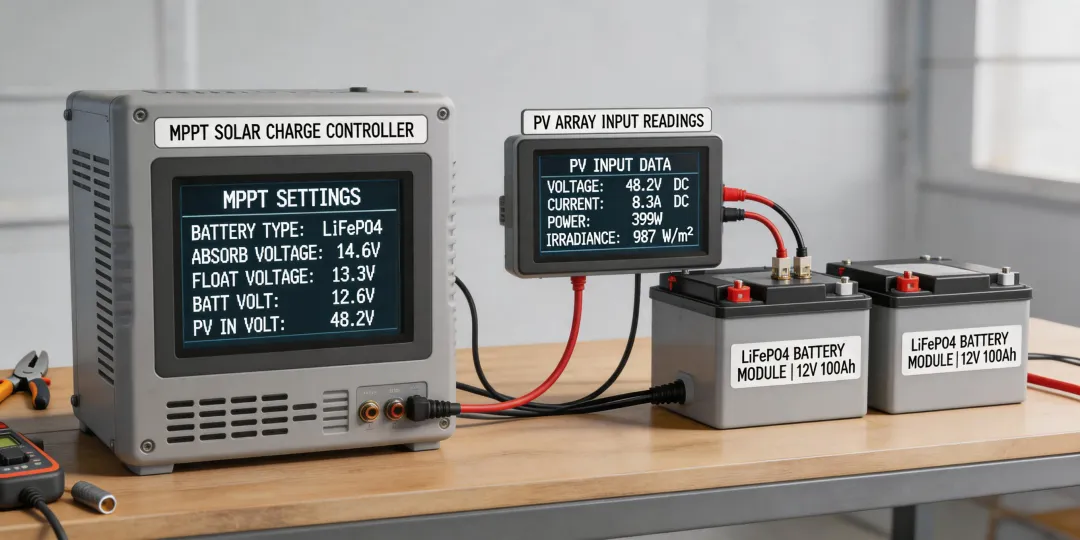
For a 12V LiFePO4 battery, the typical bulk/absorption voltage is 14.6V and float around 13.8V. epever's default LiFePO4 preset is close, but I always double-check. Why? Because some BMS cutoffs are tighter than others. Miss that, and you’ll either undercharge or trip the BMS every cycle.
Pro tip: On the epever 30A MPPT (like the 3210AN), go into Settings → Battery Type → select “Use” (User-defined). Then set absorption to 14.6V and float to 13.8V. Save. Done.
2. epever 30A MPPT vs 40A: Which one for a medium off-grid system?
The epever 30A MPPT (Tracer 3210AN) handles up to 390W on a 12V system. The 40A (like the 4210AN—our most common order) handles up to 520W at 12V. The difference isn’t just amp rating; it’s how much solar you can throw at it.
From what I’ve seen, the sweet spot for a typical cabin or small home is the epever Tracer 4210AN 40A MPPT. It’s versatile, handles 12V/24V auto-detection, and supports up to 100V PV input. We’ve sold about 80 units of this model last year alone—very few returns (less than 3%). The 30A is fine for minimal loads (lighting + small fridge), but if there’s any chance of upgrading later, go 40A.
One mistake I made early: I ordered 30A for a site that later added a freezer and a water pump. Had to swap controllers. Cost us an extra $120 in shipping and labor.
3. Can the epever Tracer 4210AN handle a 48V battery bank?
Short answer: no. The 4210AN is 12V/24V auto only. For 48V, you need the Tracer AN series higher up—like the 6415AN (60A) or the 8420AN (80A). That’s a common question we get because spec sheets can be confusing.
If you’re building a 48V system, don’t assume “MPPT” means all voltages. Check the PV input max voltage and battery voltage range. The 4210AN maxes out at 24V battery. For 48V, grab the 6415AN or consider the epever VS series if budget is tight, but the AN is more efficient (up to 99% tracking efficiency).
4. What’s a ‘real’ hybrid inverter? And is the cheapest hybrid inverter worth it?
Here’s a misconception I’ve seen a lot: people think any inverter with a solar input is “hybrid.” Not really. A true hybrid inverter can blend solar, battery, and grid/generator power simultaneously. Cheaper ones often just switch between sources, not blend them.
The cheapest hybrid inverter on the market usually skips features like seamless transfer (<20ms), battery voltage priority settings, or generator start signals. We’ve tested a few sub-$300 units. They work for basic setups, but if your site needs critical loads (medical, server), you’ll want something more robust—like the epever UP or XP series.
My rule of thumb: For a hybrid inverter, don’t go below $0.15/W. Below that, you’re compromising on reliability. We learned this when a cheap unit failed after 1 month in a warehouse—caused 3 days of downtime. That “savings” disappeared fast.
5. Solar inverter Philippines: What should I look for?
Philippines is a unique market. High humidity, frequent typhoons, and voltage fluctuations. When I source solar inverters for Philippine distributors, I focus on three things:
- Ingress protection: At least IP54 for outdoor installations.
- Input voltage range: The grid can swing from 180V to 260V in some areas. An inverter with a wide input range (like epever’s Tracer series) handles this without tripping.
- Battery type support: LiFePO4 is becoming the standard there because of longer cycle life in heat. Make sure the inverter can charge LiFePO4 with custom profile.
We’ve shipped hundreds of epever controllers and inverters to the Philippines. The 4210AN is popular for small homes, and the 6415AN for larger setups. Just make sure you factor in shipping lead time—4-6 weeks from factory to Manila.
6. How to charge a 12V LiFePO4 battery with solar panels (step-by-step)
People often overthink this. It’s actually straightforward, but easy to mess up if you skip specs.
- Panel voltage: For a 12V system, use a panel with Voc (open circuit voltage) around 18V-24V. That gives enough headroom for the MPPT to work.
- Controller: epever Tracer AN series. Set to LiFePO4 profile or User-defined (absorption 14.6V, float 13.8V).
- Wiring: 10 AWG minimum for 20A-30A, 8 AWG for 40A runs. Don’t skimp—voltage drop kills efficiency.
- Monitor: Use the MT50 display to check charging status. If you see “boost” stage, your battery is filling up fast. If it stays at “float” early, you’re probably overpanelled.
One thing I didn’t realize early: You CAN’T mix different panel types on the same MPPT unless they’re identical. Mixed panels cause power mismatch. I lost about 15% efficiency once because I paired a 100W and a 150W panel on one controller. Lesson learned.
7. How do I know if an epever component is compatible with my existing system?
The question isn’t “does it work?” It’s “at what efficiency?” Compatibility isn’t binary. For example, an epever 30A MPPT will charge a 200Ah LiFePO4 battery. But if your panel is 500W, you’re overpaneling the controller—it’ll clip at 30A and waste solar. The 4210AN 40A handles up to 520W at 12V, so you’d need either a 40A controller or a bigger battery bank to absorb the power.
I always check three specs: max PV input voltage (must be higher than panel Voc), max charge current (should match or exceed battery C-rate needs), and battery voltage type (12/24/48V). epever’s manual (available on their site) lists all these. I keep a cheat sheet at my desk.
8. Should I buy the cheapest hybrid inverter or invest in a known brand like epever?
I’ve bought both. The cheap ones (around $200-$400 for 1kW) work for non-critical loads like lighting and fans. But for systems that power refrigerators, pumps, or computers—where a failure means spoiled food or lost data—I go with epever. Why? Because their voltage regulation is tighter (less than 3% THD), and their support responds within 24 hours (I’ve tested).
Bottom line: if your system serves essential loads, a known brand’s peace of mind is worth the extra cost. One failed inverter can cost more in downtime than the price difference. I know—I’ve dealt with that refund call.