-
Your Epever Purchasing Questions, Answered
-
1. What exactly is an Epever MPPT solar charge controller, and why should I care?
-
2. How do I choose between Epever's 20A, 30A, and 40A models?
-
3. Is the Epeper Tracer 4210AN 40A worth the upgrade over the 20A?
-
4. Can I use an Epever charge controller with a 12V battery system AND a power inverter from Autozone?
-
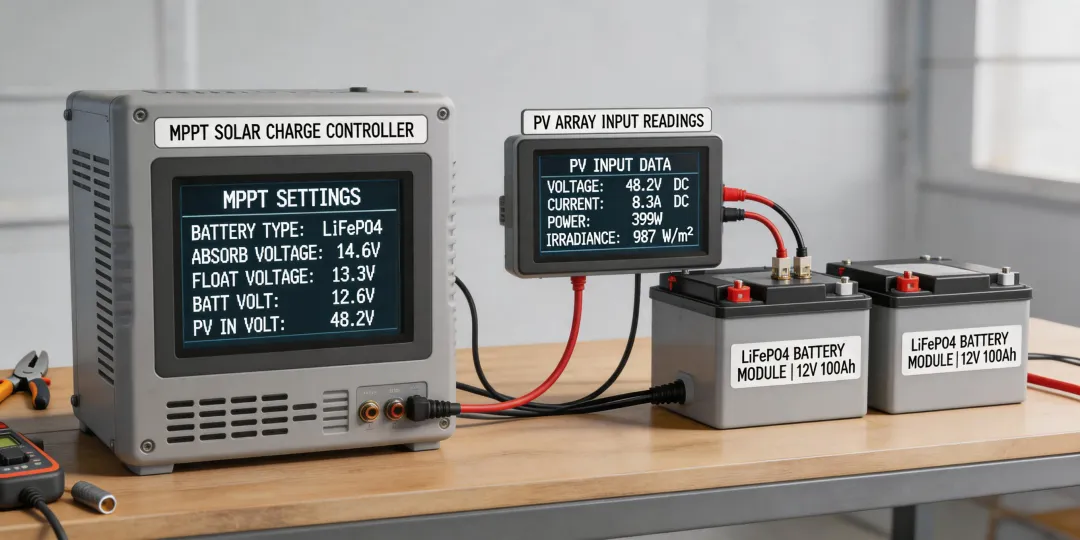
5. How do I configure the Epever for LiFePO4 batteries? I've heard it's tricky.
-
6. How do I calculate the right solar inverter size for my Epever system?
-
1. What exactly is an Epever MPPT solar charge controller, and why should I care?
When I took over purchasing for our company in 2022, I was pulling up comparison tables for solar charge controllers and thinking, 'I really should know this stuff cold.' Two years and about 80 orders later—spanning everything from small 12V setups to larger off-grid systems—I've picked up the practical side of choosing Epever gear. This FAQ covers the questions that actually come up when you're the person signing the PO.
Your Epever Purchasing Questions, Answered
1. What exactly is an Epever MPPT solar charge controller, and why should I care?
Put simply, it's the brain between your solar panels and your battery bank. An MPPT (Maximum Power Point Tracking) controller, like Epever's Tracer AN series, does a better job of squeezing usable power from panels than older PWM technology. In real terms, that means more of your solar array's wattage actually charges the battery—especially in cooler weather or partial shade. I can't give you an exact efficiency number for every scenario, but from our installations, the difference between a basic PWM and a good MPPT like the Epever Tracer 4210AN 40A is noticeable enough that we standardized on MPPT for all new projects. It's basically a no-brainer for any system over 200W.
2. How do I choose between Epever's 20A, 30A, and 40A models?
This one comes down to the math. The controller's amp rating tells you how much solar current it can handle. A 20A unit works for a roughly 300W panel array on a 12V system, or 600W on 24V. The Epever Tracer 4210AN 40A doubles that capacity—handy if you think you'll expand later. I actually wish I'd tracked how many times we've had to swap a 20A for a 40A because someone upsized their panels. Our rule of thumb now: if you're on the fence, go up a size. The cost difference isn't huge, and it saves a hassle down the road. Granted, a 20A unit is fine for a small cabin or RV setup that won't change. Your mileage may vary if you're just powering a weekend trailer.
3. Is the Epeper Tracer 4210AN 40A worth the upgrade over the 20A?
Honestly, for most of our projects, yes. The 4210AN has a few things going for it. One, it supports higher PV input voltage—up to 100V on a 12V system. That means you can wire more panels in series, which cuts down on wiring losses. Two, it comes with a better display and more flexible battery charging profiles, including dedicated LiFePO4 settings. I don't have hard data on failure rates across all brands, but from our experience, the build quality on the AN series feels solid. The connectors are robust, and the heatsink is sized for continuous operation. For anyone putting together a system that needs to run reliably—whether it's a remote monitoring station or a small off-grid home—the 40A model is a solid choice. To be fair, the 20A units work fine for smaller loads, but future-proofing is part of my job.
4. Can I use an Epever charge controller with a 12V battery system AND a power inverter from Autozone?
You can, but with a big caveat. A 12V battery charge controller from Epever is designed to charge a 12V battery bank from solar panels. Separately, you connect an inverter—like one you'd pick up at Autozone—to the same battery to turn that DC power into 120V AC for appliances. The trick is matching the inverter size to your battery capacity and your loads. A cheap 400W inverter from Autozone is fine for charging a laptop and running a small fan off a decently sized battery. But if you hook a 2000W inverter to a single 100Ah battery and crank a microwave, you'll drain it fast and risk damaging the battery. The charge controller and the inverter are independent, but they share the same battery. So, the battery's capacity has to cover the inverter's draw. Roughly speaking, a 100Ah lead-acid battery can support about a 500W inverter for a short burst. For continuous loads, you need a lot more battery. I've seen this mistake more often than I'd like.
5. How do I configure the Epever for LiFePO4 batteries? I've heard it's tricky.
It used to be. Older Epever controllers had a 'User' setting where you manually entered the charge profile voltages. That was a pain, and I ate a chunk of department budget once because I set the absorb voltage too high on a LiFePO4 battery—fried the BMS. But the newer models, like the Tracer AN series, now have a dedicated LiFePO4 option in the battery type menu. On the 4210AN, you just scroll to battery type, select 'LiFePO4', and the controller applies the manufacturer-recommended profile (typically around 14.4V absorb and 13.8V float for a 12V battery). It's way simpler. That said, always double-check the specific voltage limits for your exact battery brand. Some are more conservative than others. And if you're using a really cheap lithium battery, I'd still manually set the voltages a bit lower to be safe. The Epever manual covers the steps, but honestly, the built-in profile handles 90% of cases fine.
6. How do I calculate the right solar inverter size for my Epever system?
This is the question I get most often. The calc involves a few steps. First, figure out your load: what's the biggest appliance you'll run simultaneously? A fridge (say 800W starting draw) plus a few lights (100W) means you need an inverter that handles at least 900W continuous. I'd add 20% headroom, so a 1200W inverter. Second, check your battery voltage and capacity. For a 12V system, a 1200W inverter pulls about 100 amps from the battery at full load. Your battery bank needs to handle that current without voltage drop. Third, your Epever charge controller must be sized to recharge the battery bank within a reasonable solar day. If you have a 1200W inverter and run it at half load for 5 hours, you've used 3000Wh. On a 12V system, that's 250Ah. A 40A controller can put back about 480Ah per day in good sun (5 hours of peak sun), so it's fine. The Epever Tracer 4210AN 40A is a good match for a 200-400Ah battery bank powering a 1000-1500W inverter. Take this with a grain of salt, though—local weather and panel tilt matter. I usually tell people to oversize the controller slightly rather than undersize it. It's way more forgiving.