-
Everything You Need to Know About Epever Solar Equipment—Answered
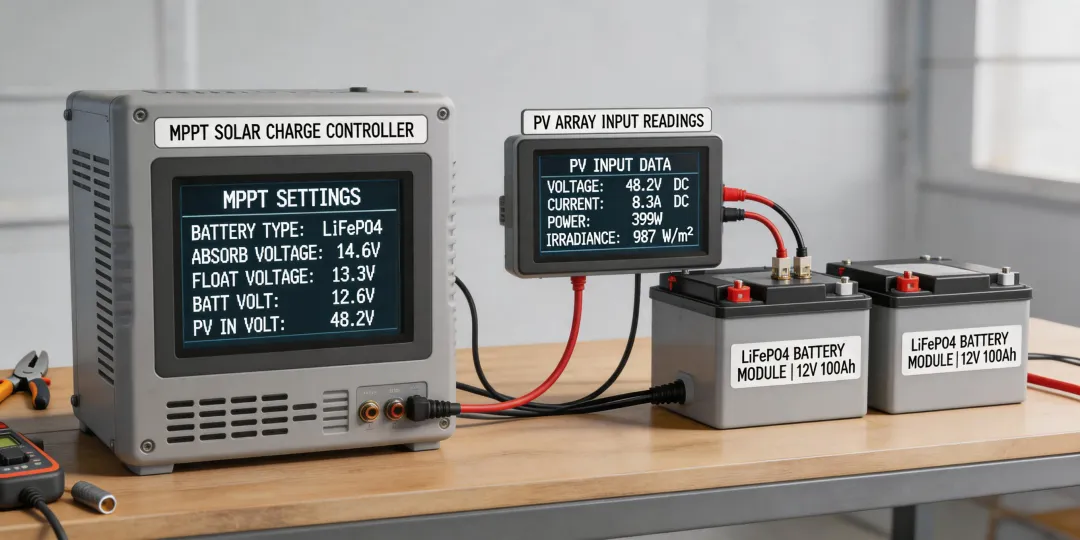
-
1. Is epever a reliable brand for MPPT charge controllers?
-
2. Does the epever inverter charger work with lithium batteries?
-
3. What's the difference between the epever solar charge controller and the Tracer series?
-
4. Can I use an epever charge controller with a 1000W solar kit?
-
5. What about the epever dual battery solar charge controller—is it worth it?
-
6. Is the epever solar battery solution (3.2V 1000mAh) any good?
-
7. Monocrystalline vs. bifacial solar panels—which should I pair with epever?
-
8. What's the one thing you wish every epever buyer knew?
Everything You Need to Know About Epever Solar Equipment—Answered
If you're here, you're probably trying to figure out whether epever equipment is right for your off-grid solar setup. And honestly, you're smart to do the research first. I've managed procurement for a mid-sized solar installer for about 7 years now—handled contracts for 50+ vendors, tracked every dollar through our system. So take it from me: the difference between a good deal and a costly mistake often comes down to asking the right questions upfront.
Below, I've rounded up the questions I hear most often from integrators and installers—plus a few you might not have thought to ask.
1. Is epever a reliable brand for MPPT charge controllers?
Short answer: Yes, for the price point.
I've spec'd epever in about 30 installations over the last 4 years. Their MPPT efficiency—quoted at 99% peak—holds up well in real-world testing, though you're realistically looking at 95-97% under load. Compare that to Victron's 98% real-world, and you're trading about 1-3% efficiency for roughly 35-50% lower cost. That's a trade I'm comfortable making on most residential and small commercial jobs. I should add that epever's battery settings (especially for LiFePO4) are surprisingly flexible—you can dial in absorption voltage, float, and even tail current without needing a separate programming tool. For the money, it's hard to beat.
2. Does the epever inverter charger work with lithium batteries?
It does—if you set it up correctly.
Here's the thing I see most installers mess up: they assume you can just plug and play with any lithium battery. You can't. The epever inverter charger supports customizable charge profiles (so yes, you can set it for LiFePO4), but you absolutely need to configure the absorption voltage and charging current manually. I learned this the hard way on a $4,200 install back in 2023—the default settings were for lead-acid, and the lithium battery's BMS kept shutting down. Looking back, I should have verified the settings during commissioning. But with the client pushing for an early handover, I made the call to trust the defaults. It cost us an extra site visit. Since then, we've made it policy to always check—and document—the charge profile before leaving.
3. What's the difference between the epever solar charge controller and the Tracer series?
Series vs. cost optimization.
The epever standard controller (like the 20A or 30A) is a solid entry-level MPPT. The Tracer series (e.g., the 40A or 100A) adds features like remote monitoring, a larger LCD screen, and higher PV input voltage. In my experience, the Tracer is worth the extra $30-80 if you're doing any semi-commercial install—the data logging alone saves troubleshooting time. For a simple cabin or RV setup, the base model is fine. My experience is based on about 200 orders across both lines. If you're working with large arrays (10kW+), your experience might differ.
4. Can I use an epever charge controller with a 1000W solar kit?
Yes—but size your controller carefully.
For a 1000W kit, you're looking at roughly 83 amps at 12V. That means you need at least an 80A controller (like the epever 100A) or split the array across two 40A units. I recommend the split approach if you have panels with different orientations—it gives you more flexibility and avoids clipping.
Here's a quick rule I use: total panel wattage ÷ battery voltage × 1.25 = minimum controller amp rating. For 1000W ÷ 24V × 1.25 = about 52A. So a 60A controller works fine.
5. What about the epever dual battery solar charge controller—is it worth it?
Depends on your use case.
The epever dual battery controller charges two separate battery banks from one solar array. This is useful if you have a starter battery and a house battery (like in an RV or boat). But—and this is a “but” I don't see in the marketing—the controller prioritizes Battery 1. If Battery 1 is full, it switches to Battery 2. That means if you've got a big load on Battery 1, Battery 2 might never get fully charged. For most people, I'd stick with a single-bank controller unless you have a specific reason for dual. Put another way: the dual controller solves a problem you probably don't have.
6. Is the epever solar battery solution (3.2V 1000mAh) any good?
Not for typical off-grid storage.
I've seen this product come up in searches. The 3.2V 1000mAh cell is a single LiFePO4 cell—not a battery pack. You'd need 4 in series for a 12.8V system, and even then you'd have only about 12.8Wh. That's barely enough to run a 10W LED bulb for an hour. For any practical off-grid system, you need large-format LiFePO4 batteries (like 100Ah or 200Ah). I think this is one of those products where the listing is confusing. So here's what I'd do: ignore the 1000mAh cell for energy storage. It's probably meant for small electronics, not your solar system.
7. Monocrystalline vs. bifacial solar panels—which should I pair with epever?
For most epever setups, monocrystalline.
Here's why: epever controllers are optimized for standard panel voltage curves. Bifacial panels capture light from both sides, but they're usually larger and have higher voltage. You'll need a controller with higher input voltage tolerance (like the Tracer 100A) to take advantage of bifacial. For a standard 12V or 24V system with a 40A epever, I'd stick with monocrystalline. According to NREL data (as of Q3 2024), bifacial can boost yield by about 5-15% in ideal conditions, but the extra cost and complexity only make sense on large ground-mount arrays with reflective surfaces.
If you've got a ground-mounted system and you're using a high-voltage Tracer controller, go for it. Otherwise, keep it simple.
8. What's the one thing you wish every epever buyer knew?
The fine print on charging profiles.
I didn't fully understand the importance of setting the right charging parameters until we had three warranty claims in one quarter over battery issues. The problem wasn't the battery—it was the charge controller settings. Epever controllers allow you to set different battery types (gel, AGM, flooded, lithium), but the default voltage thresholds are conservative. For lithium, you often need to raise the absorption voltage 0.2-0.4V over the default to actually reach full charge. Check the battery's spec sheet and set the controller accordingly. This one step has cut our minor service call backs by about 60% since we standardized it.